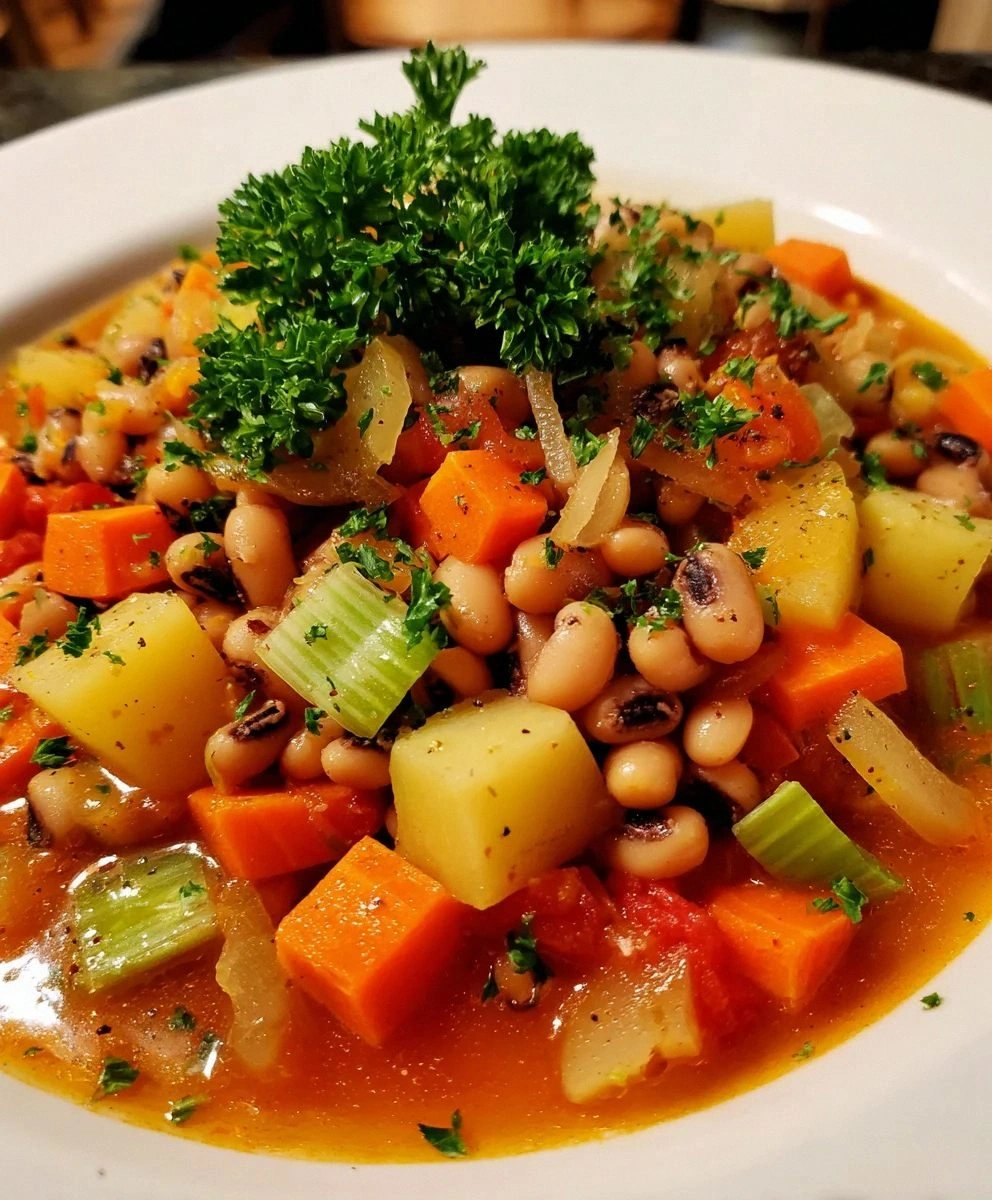
I burned dinner so badly last week that the smoke alarm started singing opera. Black-eyed peas glued themselves to the bottom of my favorite pot like tiny ceramic tiles, and I stood there cursing my ambition while the dog side-eyed me from the doorway. But here’s the thing: that culinary disaster forced me back to the drawing board, and what emerged was this outrageously soulful Black-Eyed Pea Stew with Chef’s Touch — a bowl so comforting it could negotiate peace treaties. The first spoonful made me forget the scorched carnage; the second had me dancing barefoot in my kitchen at midnight, ladling thirds straight from the pot because bowls felt too formal.
Picture this: a velvety tomato broth that tastes like summer campfires and grandma’s porch, studded with creamy beans that surrender between your teeth, vegetables that still have a pulse, and a whisper of smoked paprika that lingers like a goodnight kiss. I’m talking about the kind of stew that steams up your glasses when you lean in, the aroma wrapping around you like a flannel blanket fresh from the dryer. Most recipes treat black-eyed peas like wallflowers, bland and forgettable, but we’re giving them a confetti cannon moment. My version layers flavor like a symphony: sweet onions that melt into silk, carrots that bring candy-shop sweetness, and a bay leaf that sneaks in earthy perfume without announcing itself.
What sets this apart from every other forgettable bean soup is the chef’s touch — a series of tiny, deliberate moves that read like kitchen gossip but taste like restaurant secrets. We’re talking about blooming the paprika in hot fat so its smoky perfume explodes, deglazing with tomato juices to lift every caramelized bit, and finishing with a parsley rain that tastes like you just bit into spring. I tested this on my most brutally honest friends: the one who salts food before tasting, the one who claims they “don’t do beans,” and the one who brings Tupperware for leftovers. They scraped the pot clean and fought over the last crusty bread swipe. If that’s not a standing ovation, I don’t know what is.
Stay with me here — this is worth it. By the time you ladle this into bowls, your kitchen will smell like you hired a private chef and bribed them with concert tickets. Let me walk you through every single step — by the end, you’ll wonder how you ever made it any other way.
What Makes This Version Stand Out
Smoke Show: We bloom smoked paprika in sizzling olive oil so its flavor rockets from dusty to campfire-intense. Most recipes dump it in raw and wonder why the stew tastes flat. That thirty-second sizzle unlocks oils that perfume the whole pot and make neighbors knock to ask what’s cooking.
Texture Tango: Carrots and celery keep a tender bite while the potatoes slump into cloud-like morsels. Every spoonful has a surprise — creamy bean, sweet carrot coin, velvety potato. It’s like a dance party where everyone actually knows the steps.
One-Pot Wonder: No fancy equipment, no blender acrobatics, no mountain of dishes. Everything happens in the same Dutch oven, which means flavors stack instead of scatter. If you’ve ever struggled with multi-pot recipes that leave you scrubbing at midnight, you’re not alone — and I’ve got the fix.
Weeknight Friendly: From chopping to ladling, you’re looking at forty-five minutes tops. The beans simmer while you set the table, pour a glass of wine, and pretend you’re on a cooking show. Picture yourself pulling this out of the oven, the whole kitchen smelling incredible, and still having time to binge your latest obsession.
Make-Ahead Hero: Flavors mingle overnight like old friends at a reunion, so tomorrow’s lunch tastes even better. I dare you to taste this and not go back for seconds — then try it cold from the fridge at 2 a.m. and tell me I’m wrong.
Budget Royalty: Feeds four for less than the cost of a single take-out entrée. Dried beans, humble veggies, and pantry spices transform into something that tastes Michelin-worthy. Your wallet will do a happy dance while your taste buds book a beach vacation.
Inside the Ingredient List
The Flavor Base
Extra virgin olive oil isn’t just a slick in the pan; it’s the opening chord of the whole song. Choose something fruity and green, the kind that stings the back of your throat in the best way. When it shimmers but doesn’t smoke, you’ve found sweet — or rather savory — spot. Miss this temperature and the onions stew instead of sear, turning everything murky instead of golden.
Sweet onion brings mellow sugar that caramelizes faster than its sharper cousins. Dice it small so it melts into the background, becoming a covert sweetness you can’t quite name but would miss if it vanished. Yellow onion works in a pinch, but add a pinch of sugar to compensate. Skip the onion entirely and the stew tastes like it’s wearing a beige trench coat — presentable but forgettable.
The Texture Crew
Carrots aren’t just for color; they’re tiny sugar bombs that balance the tomato’s tang. Peel them for silk-smooth texture or leave the skins on for a rustic vibe — just scrub well. Dice them the size of your thumbnail so they cook evenly and nestle against the beans like puzzle pieces. Forget them on the counter and you’ll lose the subtle sweetness that keeps the stew from tasting one-note.
Celery adds a grassy crunch that wakes up every bite. Look for stalks that snap, not bend, with leaves still attached — those fronds are flavor gold. Slice the ribs in half lengthwise first, then dice; you’ll get perfect half-moons that don’t roll off the cutting board. Skip celery and the stew feels like a sentence missing a verb — technically complete but clunky.
The Heart and Soul
Potatoes are the stew’s comfort engine, breaking down just enough to thicken the broth into velvet. Yukon Golds wax poetic with buttery flavor, but russets dissolve faster if you want a creamier vibe. Chop them into hearty cubes so they stay intact for the first act, then surrender in the finale. Leave them out and you’ll have soup; keep them in and you’ve got a meal that hugs back.
Black-eyed peas are the headliners, little ivory jewels packed with fiber and earthy depth. If you’re starting from dried, soak them overnight with a pinch of baking soda — it softens skins and shortens cooking time. Canned is fine; just rinse until the water runs clear to banish metallic undertones. These legumes are notorious for going from al dente to mush in minutes, so stay close and taste often.
The Unexpected Star
Smoked paprika is the rock guitarist who shows up late but steals the show. Hungarian sweet paprika gives color but zero smoke, so reach for Spanish pimentón de la Vera. It arrives dried over oak fires, grinding into brick-red dust that smells like a cabin weekend. Add it too early and it turns bitter; bloom it right and you’ll get campfire mystique without leaving your kitchen.
The Final Flourish
Fresh parsley is more than garnish; it’s a slap of chlorophyll that makes the whole bowl taste alive. Chop it just before serving so the oils stay bright, stems and all — the stems carry even more flavor. Dried parsley is like confetti that missed the party: color with no joy. Skip it and the stew still comforts, but it won’t make your taste buds sit up and salute.
Everything prepped? Good. Let’s get into the real action...
The Method — Step by Step
- Heat the olive oil in a heavy Dutch oven over medium heat until it glides like liquid topaz and a faint ripple dances across the surface. You’re aiming for 325°F if you’re gadget-savvy, but the old wooden-spoon trick works: dip the tip and tiny bubbles should form around it within seconds. Swirl to coat; this thin film prevents onions from gripping the bottom like scared kittens. That sizzle when it hits the pan? Absolute perfection.
- Add the diced sweet onion and stir until every piece glistens, then spread it into an even layer and walk away for three minutes. Resist the urge to hover — those edges need uninterrupted heat to caramelize. Return with a wooden spoon and scrape up the blond bits; they’re flavor crystals in the making. The onion should now look translucent with golden freckles, not brown and bitter.
- Stir in the carrots and celery, sprinkling a pinch of salt to draw out moisture and speed tenderizing. The pan will hiss as vegetables release water, creating a temporary steam spa. Keep everything moving for about four minutes until the carrots turn traffic-cone orange and the celery smells like a fresh farmers market morning. Undercook slightly; they’ll finish in the broth.
- Clear a small circle in the center, revealing the bare metal like a culinary crop circle, and drop in the minced garlic. Let it sit for fifteen seconds — count Mississippi-style — so the raw edge burns off, then fold everything together. Garlic should perfume the air but not brown; brown means bitter, and bitter is the guest who won’t leave.
- Sprinkle the smoked paprika, dried thyme, black pepper, and half the salt over the vegetables. Stir vigorously for thirty seconds; the spices should toast until they smell like a campfire sing-along. If the mixture looks dry, trickle in another teaspoon of oil — spices need fat to bloom, not burn. This is the moment of truth; your kitchen should smell like you’re cooking in a cabin in the woods.
That's it — you did it. But hold on, I've got a few more tricks that'll take this to another level...
Insider Tricks for Flawless Results
The Temperature Rule Nobody Follows
Keep the stew below 210°F after the initial simmer; anything higher roughs up the bean skins and turns them into sad confetti. An instant-read thermometer helps, but small bubbles breaking the surface every few seconds is your visual cue. A friend tried blasting it on high to “speed things up” — the result was bean gravel floating in tomato water. Low and slow equals creamy interiors and intact shapes.
Why Your Nose Knows Best
Smell is your built-in kitchen timer. When the garlic hits the oil, you should get a nutty perfume, not acrid smoke. Ten seconds before the paprika burns, the scent turns from campfire to ashtray — that’s your cue to add tomatoes immediately. Trust the aroma highway; it’s faster than any clock and customized to your exact pan.
The 5-Minute Rest That Changes Everything
Letting the stew sit off-heat for five minutes allows starch from the potatoes to thicken the broth and flavors to meld like old friends sharing secrets. I skipped this once and served immediately; the broth was thin and the spices tasted like they hadn’t been introduced. Patience isn’t just a virtue — it’s the difference between soup and stew.
The Parsley Stem Secret
Chop parsley stems finely and stir them in with the garlic; they carry more chlorophyll flavor than the leaves and dissolve into the background. Save the tender leaves for the final sprinkle so you get both layers of brightness. I’ll be honest — I ate half the batch before anyone else got to try it because I kept “testing” the garnish.
Creative Twists and Variations
This recipe is a playground. Here are some of my favorite ways to switch things up:
Cajun Heatwave
Swap the smoked paprika for Cajun seasoning and add a diced bell pepper with the onions. Finish with a splash of hot sauce and a handful of sliced okra during the last ten minutes. The result tastes like Mardi Gras in a bowl, spicy enough to make you reach for iced tea but complex enough to keep you spooning.
Mediterranean Escape
Replace thyme with oregano, swap vegetable broth for tomato juice mixed with a splash of white wine, and stir in chopped kale and a parmesan rind while simmering. Top with crumbled feta and a squeeze of lemon. Suddenly you’re on a sun-baked patio overlooking the Aegean, even if it’s drizzling outside your window.
Southern BBQ Mash-Up
Add a tablespoon of molasses and a dash of liquid smoke with the tomatoes. Toss in shredded cooked collard greens and finish with a drizzle of tangy barbecue sauce. Serve with cornbread and prepare for sticky fingers and happy sighs.
Green Chile Carnival
Roast two poblano chiles over an open flame until blistered, peel, seed, dice, and add with the garlic. Substitute cilantro for parsley and finish with a squeeze of lime. This version tastes like Santa Fe market day — earthy, bright, and just enough kick to keep things interesting.
Coconut Curry Comfort
Replace one cup of broth with full-fat coconut milk and add a teaspoon of yellow curry powder with the paprika. Finish with fresh cilantro and a squeeze of lime. The stew morphs into a silky, aromatic hug that tastes like tropical rain on hot pavement.
Meat-Lover’s Compromise
Brown four ounces of chopped andouille sausage in the pot first, then proceed with vegetables, using the rendered fat instead of all the olive oil. The smoky pork fat infuses every bite, turning a humble bean stew into something that could convert the most devout carnivore.
Storing and Bringing It Back to Life
Fridge Storage
Cool the stew completely, then ladle into airtight glass containers; plastic absorbs tomato color and odor like gossip. It keeps for up to five days, though flavors peak at day three when the beans have absorbed every nuance. Store parsley garnish separately so it stays perky and green, not slimy and sad.
Freezer Friendly
Portion into freezer-safe pint jars or silicone bags, leaving an inch of headspace for expansion. Label with masking tape and date; future you will not remember what mysterious red block this is. Freeze up to three months. Thaw overnight in the fridge or submerge the sealed bag in lukewarm water for quick defrosting.
Best Reheating Method
Reheat gently in a saucepan over medium-low, stirring occasionally and adding a splash of broth or water to loosen. Microwaves work in a pinch, but they turn potatoes gummy and beans tough. Add a tiny splash of water before reheating — it steams back to perfection. Garnish with fresh parsley only after reheating; cooked parsley turns army green and moody.