Last Tuesday I stood in my kitchen at 9:47 p.m., hair frizzed from a day of recipe testing, fridge door hanging open like a confession booth, and a half-eaten bag of pretzels on the counter. I was supposed to be “done” for the night, but my stomach staged a coup, demanding something warm, something cozy, something that felt like a hug from the inside out. I wanted meatballs—no, I needed meatballs—but red-sauce spaghetti felt as tired as my laptop battery. I spotted a lonely cup of orzo hiding behind the oat milk and thought, “What if I ditch the usual suspects and build the whole meal in one skillet, like a pasta-and-protein cuddle puddle?” Thirty-five minutes later I was standing over the stove, fork in hand, burning my tongue because I couldn’t wait five more seconds for the taste test. That first bite? Crispy-edged chicken meatballs rolling around in glossy, lemon-kissed broth with orzo that drank up every drop of flavor like a tiny pasta sponge. I ate it straight from the pan, standing up, in complete silence except for the rain pinging the window and the little voice in my head screaming, “You’re gonna want to write this one down.” So I did. And then I made it again the next night, and again on Sunday for friends who kept “happening” to drop by around dinnertime. If you’ve ever wished your chicken soup had a sassy older brother and your meatballs knew how to party, congratulations—you’ve just found your new favorite thing to cook.
Most recipes treat orzo like a wallflower, instructing you to boil it separately and toss it in at the end like an awkward afterthought. That’s the culinary equivalent of inviting someone to prom and making them ride in the trunk. Here, the orzo cooks right in the same fragrant broth that the meatballs simmered in, so every tiny rice-shaped noodle tastes like concentrated chicken, garlic, and sunshine. The meatballs themselves are a masterclass in texture: instead of the usual dense, golf-ball pucks, we’re going cloud-soft with a panade (that’s just fancy talk for bread soaked in milk), a whisper of nutmeg, and grated onion that disappears into the mix but leaves behind a mellow sweetness. A quick sear in olive oil gives them golden crispy undersides—those caramelized bits will later deglaze into the sauce, giving you depth without a four-hour marinara nap. And because life is too short for dishes, the whole production happens in one skillet. You’ll brown, simmer, and serve from the same vessel, which means you can spend your evening eating, not scrubbing baked-on crud while questioning your life choices.
Picture yourself pulling this skillet from the stove, the lemon zest hitting the hot surface and sending up a perfume that makes your neighbor wonder if you’ve opened a trattoria in your apartment. The orzo swells to plump perfection, each grain holding a tiny explosion of broth that squirts like soup caviar when you bite down. The meatballs—oh, the meatballs—are so tender they practically sigh when you cut them with the side of your fork, releasing a puff of garlicky steam that fogs your glasses in the most delightful way. A final snowfall of Parmesan melts into lacy threads that cling to everything like culinary tinsel. I dare you to taste this and not go back for seconds; I personally failed that challenge so spectacularly that I had to loosen my hoodie strings. If you’ve ever struggled with dry chicken, mushy pasta, or one-note sauces, you’re not alone—and I’ve got the fix.
Let me walk you through every single step—by the end, you’ll wonder how you ever made it any other way.
What Makes This Version Stand Out
- Cloud-Soft Meatballs: Thanks to a milk-soaked bread panade, they stay juicy even if you accidentally overcook them while you’re busy Instagramming your dinner. Most recipes skip this step and end up with rubber balls that bounce off the wall.
- One-Skillet Wizardry: Everything—from searing to simmering—happens in the same pan, so the orzo slurps up every browned bit of meatball magic. Less dishes, more Netflix time. Need I say more?
- Lemon-Zest Boom: A whisper of zest added at the very end wakes the whole dish up like a splash of cold water on a sleepy face. It’s subtle, but your taste buds will stand at attention.
- Texture Tango: Crispy meatball bottoms + chewy orzo middles + silky sauce = a three-way dance party in your mouth. Most recipes give you monotone mush; this one gives you a full mariachi band.
- Make-Ahead Hero: The meatballs can be rolled and chilled up to two days ahead, so when your in-laws announce a “quick visit,” you look like a culinary superhero instead of a panicked takeout orderer.
- Kid-Friendly, Adult-Approved: My picky nephew thinks orzo is “rice that got confused,” which means he eats it by the fistful while the grown-ups add chili flakes and pretend they’re in Santorini. Same dish, different sunglasses.
Inside the Ingredient List
The Flavor Base
Ground chicken is the obvious star, but not all packages are created equal. Look for a blend of white and dark meat (sometimes labeled “ground chicken thigh”) for the best fat ratio—about 85 % lean. Too lean and you’ll get cotton-ball meatballs; too fatty and they’ll swim in their own grease like tiny pool floats. If your store only carries breast-only grind, add an extra tablespoon of olive oil to the mix to compensate. Fresh garlic beats pre-minced every single time; the jarred stuff sits in citric acid and tastes like angry lemonade. Finely grate it with a microplane so it dissolves into the meat and doesn’t leave acrid nuggets. Dried oregano from the back of your spice rack is fine, but if you can grab a sprig of fresh, the flavor jumps from “pizza parlor” to “Mediterranean grandma.”
The Texture Crew
Panko breadcrumbs are fluffier than their Italian cousins, creating air pockets that keep the meatballs light. If you only have the sandy kind, buzz them in a blender for five seconds to break them down—trust me, it makes a difference. Whole milk is the classic choice for the panade, but in a pinch I’ve used everything from oat milk to the last splash of heavy cream thinned with water. What matters is the liquid-to-bread ratio: too little and the panade is dry; too much and you’ve got bread soup. A single large egg binds everything, but beat it first so you don’t get streaks of white running through your meat like sad marble. Nutmeg is the secret handshake of savory cooking—just an eighth of a teaspoon gives warmth without anyone being able to name it.
The Unexpected Star
Orzo is technically pasta, not rice, but it behaves like both: it releases starch into the broth, naturally thickening the sauce without flour or cornstarch. Buy the bronze-cut kind if you can find it—those rough edges grab onto the liquid like Velcro. Low-sodium chicken broth is non-negotiable; the regular stuff reduces and becomes a salt lick that obliterates every other flavor. A single bay leaf, toasted in the fat before the broth goes in, adds a tea-like herbaceous note that makes people ask, “What is that?” in the best way. And here’s the curveball: a teaspoon of tomato paste. Not enough to turn the dish red, just enough to give a whisper of umami that makes the chicken taste more like…chicken.
The Final Flourish
Lemon zest goes in at the very end so the oils stay bright; if you add it while cooking, it turns bitter like it’s holding a grudge. Use a microplane and only the yellow skin—white pith is the archenemy of happiness. Fresh parsley looks pretty, but it also cleanses your palate so you taste every bite anew. Parmesan is optional but highly encouraged; buy a wedge and grate it yourself because the pre-shredded stuff is coated in cellulose that refuses to melt smoothly. A final drizzle of good olive oil—fruity, peppery, the kind that makes you cough a little—adds silkiness and turns your skillet into a glossy magazine photo.
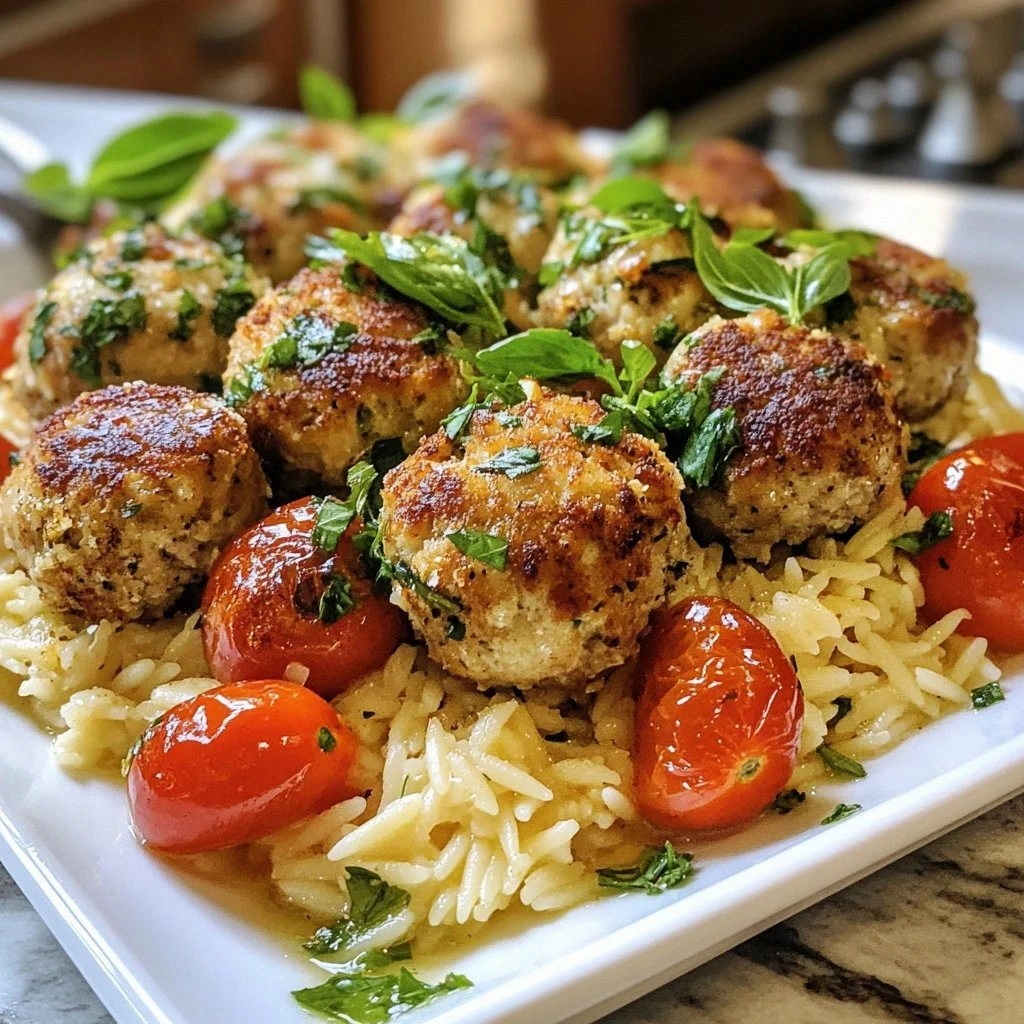
The Method — Step by Step
- Mix the Panade: In a small bowl, combine ½ cup panko with 3 tablespoons milk and let it sit while you measure everything else. After five minutes it should look like wet sand at high tide—pliable but not dripping. If it’s soupy, sprinkle in another tablespoon of panko; if it’s dusty, add a splash more milk. This little soggy bread sponge is insurance against tough meatballs, so don’t skip it even if you’re tempted to “save time.” I once tried to speed-run this step and ended up with meat pebbles that could’ve chipped a tooth.
- Build the Meat Mix: In a large bowl, add 1 pound ground chicken, the soaked panko, 1 beaten egg, 2 grated garlic cloves, 2 tablespoons minced onion, 1 teaspoon kosher salt, ¼ teaspoon pepper, ½ teaspoon dried oregano, and ⅛ teaspoon nutmeg. Mix with your hands until just combined—over-mixing is the fast track to rubber city. The mixture will feel sticky; that’s perfect. Cover and chill for 15 minutes so the fat firms up and the balls hold their shape when seared. Chill your mixing bowl in the freezer for five minutes first and you’ll shave time off that rest.
- Roll Baby Roll: Dampen your hands with water (this keeps the meat from gluing to your palms) and scoop out heaping tablespoons. Roll into 1¼-inch meatballs—you should get about 24. Place them on a parchment-lined plate and pop them into the fridge while you heat the pan. Cold meatballs hit the oil slower, giving the exteriors time to brown before the insides overcook. If you’re making ahead, cover with plastic wrap and refrigerate up to 48 hours.
- Sear for Gold: Heat 2 tablespoons olive oil in a 12-inch skillet over medium-high until shimmering. Add half the meatballs in a single layer; crowding steams instead of browns. Let them sit undisturbed for 2 minutes—yes, set a timer, because two minutes feels like forever when you’re hungry. When the bottoms are deeply golden (peek with tongs), flip and sear another 90 seconds. Transfer to a plate; repeat with remaining meatballs. Those browned bits stuck to the pan? Liquid gold. Do not wash the pan. I repeat—do not wash the pan.
- Aromatics In: Reduce heat to medium, add 1 more tablespoon oil if the pan looks dry, then scrape in ½ cup finely diced onion and 1 grated carrot. Cook 3 minutes until the onion turns translucent and the carrot specks look like confetti. Add 1 teaspoon tomato paste and mash it around for 30 seconds; it will darken from ketchup red to brick red and smell vaguely of sun-dried tomatoes. This caramelization gives the broth a background bass note that makes people ask for your secret.
- Toast the Orzo: Pour 1 cup dry orzo into the skillet and stir to coat every grain in the glossy, veggie-speckled oil. Toast for 90 seconds; the pasta will turn from pale straw to a freckled tan and smell like popcorn’s savory cousin. This step locks in texture so the orzo doesn’t dissolve into gruel later. Don’t walk away—it goes from perfect to burnt faster than a toddler’s mood swing.
- Deglaze & Simmer: Pour in 3 cups low-sodium chicken broth, ½ cup water, and tuck in 1 bay leaf. Return the meatballs (and any juices) to the pan; they should peek out like hippos in a watering hole. Bring to a gentle boil, then drop to a lively simmer, cover with a lid slightly ajar, and cook 12 minutes. Stir once at the 6-minute mark so the orzo doesn’t glom onto the skillet floor like stubborn barnacles.
- Finish & Shine: Remove lid, taste an orzo—it should be al dente and the sauce thick enough to coat but not gloppy. If it’s soupy, simmer 2 more minutes; if it’s tight, loosen with a splash of broth. Off the heat, stir in 1 teaspoon lemon zest, 2 tablespoons chopped parsley, and ¼ cup grated Parmesan. The residual heat melts the cheese into silky strings that cling to every meatball. Let it rest 5 minutes; the starch keeps drinking and the flavors marry like they just swiped right.
That’s it—you did it. But hold on, I’ve got a few more tricks that’ll take this to another level...
Insider Tricks for Flawless Results
The Temperature Rule Nobody Follows
Chicken meatballs need to hit 165 °F internally, but carry-over heat will tack on another 3–4 degrees after you pull them. I pull at 160 °F and let the residual simmer get them the rest of the way. Use an instant-read thermometer inserted sideways into the fattest ball; guessing leads to hockey pucks or pink centers, neither of which wins friends. If you don’t own a thermometer, cut one open—juices should run clear, not rosy. A friend tried the “poke and hope” method once and served what we now refer to as “rose-veined surprise.” Don’t be that friend.
Why Your Nose Knows Best
When the orzo toasts, you’ll smell a nutty aroma that signals it’s time to add liquid—if you wait for color alone, you’ve overshot. Same goes for the tomato paste: it goes from sweet to bitter in a nanosecond, so when it smells like concentrated pizza sauce, deglaze immediately. Trust your olfactory bulb; it’s been honed since caveman days to keep you from burning dinner. I keep a window cracked so the scent doesn’t desensitize me—stay humble, stay sniffing.
The 5-Minute Rest That Changes Everything
After cooking, the skillet is volcanic. Letting it sit off-heat for five short minutes lets the orzo absorb the last of the broth and the cheese integrate instead of seizing into rubber. Cover with the lid askew so steam escapes; too tight and you’re back to soup city. Use this pause to set the table, pour wine, or practice your Oscar acceptance speech for Best Home Cook. I once skipped the rest in a fit of hanger and the sauce split like a bad relationship—learn from my hubris.
Creative Twists and Variations
This recipe is a playground. Here are some of my favorite ways to switch things up:
Spicy Calabrian Rage
Swap the oregano for 1 teaspoon Calabrian chili paste and add ¼ cup chopped roasted red peppers to the broth. The paste stains the orzo a sunset orange and delivers a slow, smoky heat that blooms minutes after you swallow. Top with shaved ricotta salata instead of Parmesan for a salty pop that tames the fire. Serve with a cold pilsner and prepare to sweat pretty.
Creamy Spinach & Feta Dream
Stir in 2 cups baby spinach and ¼ cup crumbled feta during the final 2 minutes of simmering. The spinach wilts into silky ribbons and the feta melts into tangy pockets that make the sauce taste like spanakopita in pasta form. A squeeze of extra lemon keeps it bright against the creamy saltiness. Vegetarians in the crowd love this version—just swap the chicken for cannellini-bean balls (mash 1 can beans + ½ cup breadcrumbs + egg).
Spring Green Goddess
Replace the carrot with ½ cup asparagus coins and add ½ cup peas in the last 3 minutes. Finish with a shower of fresh dill and mint instead of parsley. The herbs make the skillet smell like a farmer’s market after rain, and the asparagus tips stay perky against the soft orzo. Perfect for that awkward in-between season when you’re wearing a sweater on top and shorts below.
Smoky Bacon Boulevard
Start by rendering 2 chopped bacon strips; remove the crispy bits and use the drippings instead of olive oil to sear the meatballs. Return the bacon at the end for smoky sprinkles that add crunch and a campfire vibe. Swap the lemon zest for orange to play off the bacon’s sweetness. This is the version that wins tailgates and breakup recoveries alike.
Moroccan Sunshine
Add ½ teaspoon each of ground cumin and coriander to the meat mix, and stir ¼ cup golden raisins into the broth with the orzo. The raisins plump into juicy jewels that contrast the savory meatballs. Finish with toasted slivered almonds and a pinch of cinnamon. Your kitchen will smell like a Marrakech spice souk, minus the haggling.
Little-Kid Rainbow Fun
Use turkey instead of chicken (milder flavor) and add ½ cup tiny diced rainbow carrots to the aromatics. The colors bleed slightly, turning the orzo into confetti that entices even the pickiest eater. Skip the lemon zest and stir in ¼ cup shredded mozzarella at the end for cheese-pull glory. My nephew calls it “party pasta” and requests it for birthdays.
Storing and Bringing It Back to Life
Fridge Storage
Cool leftovers to room temperature within two hours, then transfer to an airtight container. It keeps up to four days, though the orzo will continue drinking liquid like a thirsty teenager, so you’ll probably need to add a splash of broth when reheating. Press a sheet of plastic wrap directly onto the surface to prevent the top layer from drying into pasta jerky. Store any extra Parmesan in a separate zip-top bag so you can refresh the cheesy hit on day three.
Freezer Friendly
Portion into freezer bags, press out excess air, and freeze flat for up to three months. Thaw overnight in the fridge, then reheat gently with ¼ cup broth per serving. The texture bounces back surprisingly well because the panade in the meatballs protects them from freezer burn. Pro tip: freeze in single-serve muffin trays, pop out the pucks, and store in one big bag—easy grab-and-go lunches that thaw faster than a rom-com plot.
Best Reheating Method
Stovetop wins every time: place leftovers in a skillet with a splash of broth, cover, and warm over medium-low, stirring once, until heated through—about 6 minutes. Microwave works in a pinch: use 50 % power in 45-second bursts, stirring between, and add a teaspoon of water to steam. Whatever you do, avoid high heat—it turns the orzo into tapioca pearls and the meatballs into BB pellets. Add a fresh sprinkle of Parmesan and parsley after reheating to fake the just-cooked vibe.