I still remember the first time I tried making char siu at home. It was a rainy Saturday, the kind of day that begs for takeout, but I was determined to recreate that glossy red pork from my favorite Chinatown joint. Three hours later, my kitchen looked like a crime scene—sticky honey on the ceiling, five spice in my eyebrows, and a sad tray of pale, chewy pork that tasted like disappointment. My roommate took one bite, patted my shoulder, and suggested we order pizza. Here's the thing though—I don't give up that easily. Over the next six months, I became obsessed, testing every recipe from glossy cookbooks to sketchy internet forums, until I cracked the code to the most outrageously delicious char siu you'll ever taste outside of Hong Kong.
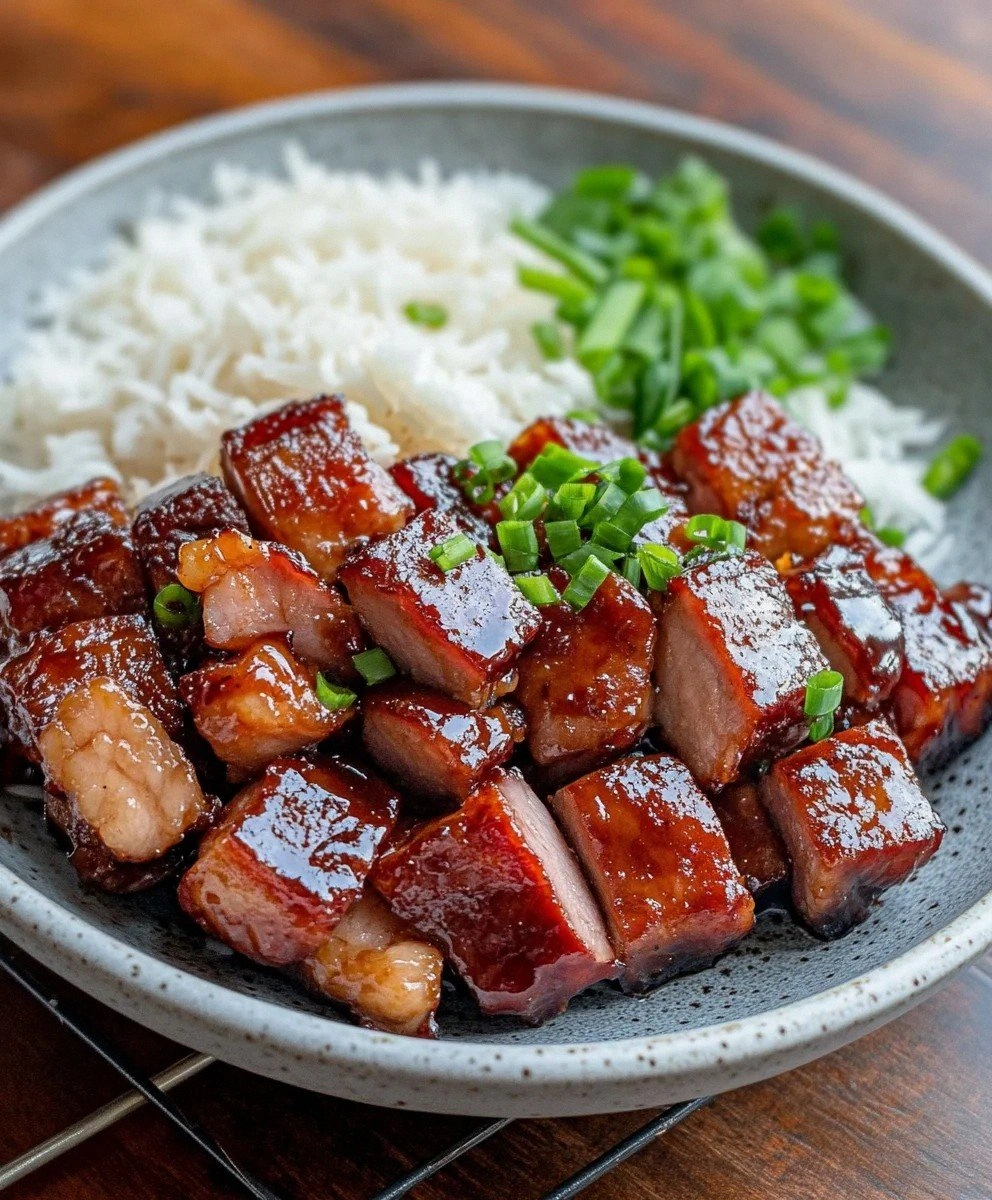
The moment you pull this char siu from your oven, your entire kitchen transforms into a Chinatown barbecue shop. The air fills with this intoxicating perfume of five spice, honey, and caramelized pork fat that's so powerful, your neighbors will start showing up with empty plates. Picture this: glistening slices of pork with those iconic charred edges, the meat so tender it practically melts on your tongue, and that signature sticky glaze that's equal parts sweet, savory, and smoky. This isn't just another recipe—this is the recipe that'll make you cancel your takeout orders forever.
What makes this version completely different from every other char siu recipe floating around the internet? Simple: we're going rogue on the traditional methods in ways that would make Cantonese grandmothers raise their eyebrows. We're talking about a double-glazing technique that creates an almost candy-coated exterior, a marinade that penetrates every single fiber of pork, and temperature tricks that guarantee juicy meat without any of that dreaded dryness that plagues most homemade attempts. I dare you to taste this and not go back for seconds.
Here's my confession: I ate half the batch before anyone else got to try it. Not because I'm greedy (okay, maybe a little), but because once you taste the first slice, you literally cannot stop yourself. The combination of sweet hoisin, umami-rich soy, and that magical fermented red bean curd creates something so addictive, it should probably be regulated. Stay with me here—this is worth it. Let me walk you through every single step—by the end, you'll wonder how you ever made it any other way.
What Makes This Version Stand Out
Flavor Bomb: We're not just brushing on sauce—we're creating layers of flavor that build like a symphony. First, the marinade seeps deep into the pork fibers overnight. Then, we baste with a reduced glaze during roasting. Finally, a quick blast under the broiler creates those iconic charred edges that taste like pure magic.
Texture Paradise: Most recipes give you either dry pork or undercooked centers. Not this one. We start with a slow roast at a lower temperature, then crank up the heat for that signature caramelization. The result? Meat so tender it falls apart under your chopsticks, with sticky edges that shatter like thin ice.
Color That Pops: That restaurant-quality red sheen isn't from food coloring (though we'll talk about that option). We're using fermented red bean curd, which gives an authentic color and adds incredible depth. Your pork will glow like rubies under the kitchen lights.
Weekend Project, Weekday Reward: Yes, it needs an overnight marinade. But here's the genius: once it's marinated, the cooking is basically hands-off. Pop it in the oven, baste it a few times, and you've got restaurant-quality char siu while binge-watching your favorite show.
Leftover Magic: This pork tastes even better the next day. Chop it up for fried rice, stuff it in bao, or just cold-snack it straight from the fridge. I've been known to stand in front of the refrigerator at midnight, eating slices like potato chips.
Crowd Pleaser Supreme: Bring this to any potluck and watch people lose their minds. It's exotic enough to impress, familiar enough to comfort, and delicious enough that you'll become that friend—the one who always gets asked to "bring that pork thing again."
Alright, let's break down exactly what goes into this masterpiece...
Inside the Ingredient List
The Flavor Base
Pork shoulder is your canvas here, and trust me, you want the good stuff. Look for well-marbled meat with a nice fat cap—that fat renders into pure flavor during roasting. Don't go lean; this isn't diet food, and trying to make it healthy defeats the entire purpose. The fat keeps the meat juicy and bastes it from the inside out. If your butcher tries to sell you tenderloin, smile politely and walk away.
Hoisin sauce forms the backbone of our marinade, but not all hoisin is created equal. Skip the generic supermarket brands and hunt down Lee Kum Kee or Koon Chun. The difference is night and day—premium hoisin has complex notes of fermented soybeans, garlic, and five spice that cheap brands just can't match. It's like comparing a fine wine to grape juice.
Soy sauce brings the umami hammer, but here's where we get picky. Use a combination of light soy for saltiness and dark soy for color and depth. Light soy is thin and salty; dark soy is thick, sweet, and gives that gorgeous mahogany color. Together, they create layers of flavor that sing in harmony.
The Texture Crew
Honey is our glazing superstar, but timing is everything. Add it too early and it burns; add it too late and it doesn't penetrate. We'll brush it on during the last 15 minutes, creating that signature sticky sheen that makes char siu so addictive. Pro tip: warm the honey slightly so it brushes on like liquid gold.
Chinese five spice powder is your secret weapon for authentic flavor. This isn't just one spice—it's a carefully balanced blend of star anise, cloves, cinnamon, Sichuan peppercorns, and fennel seeds. Each component plays a role: star anise for licorice notes, cinnamon for warmth, Sichuan peppercorns for that subtle tongue-numbing sensation. Get the good stuff from an Asian market; the supermarket version tastes like dusty regret.
Maltose gives us that professional-level shine and stickiness. It's what makes restaurant char siu look like it's been lacquered. No maltose? Corn syrup works, but you'll miss that subtle malt flavor that makes people ask "what's your secret?"
The Unexpected Star
Fermented red bean curd is the game-changer that separates amateur from authentic. These little cubes of fermented tofu are packed with umami and give char siu its signature red color. Mash them into a paste and they disappear into the marinade, leaving behind incredible depth and that restaurant-quality hue. It's like MSG's more sophisticated cousin.
Shaoxing wine brings complexity and helps tenderize the meat. This isn't just any rice wine—it's aged, rich, and slightly sweet with notes of sherry. In a pinch, dry sherry works, but once you smell the real stuff, you'll understand why it's worth hunting down. It's the difference between good and "holy crap, what did you put in this?"
The Final Flourish
Garlic and ginger provide the aromatic backbone, but we're not just mincing and tossing. We'll grate them into a paste so they disappear into the marinade, leaving their essence without any textural distractions. Fresh is mandatory here—dried or powdered versions taste like disappointment and broken dreams.
White pepper adds subtle heat without competing with our other flavors. It's different from black pepper—more delicate, with a gentle warmth that builds slowly. Skip it and your char siu will taste flat, like a joke without a punchline.
Everything's prepped? Good. Let's get into the real action...
The Method — Step by Step
- Start by slicing your pork shoulder into long strips, about 2 inches wide and 1 inch thick. Think of them as pork lollipops that'll soak up all that glorious marinade. Don't go too thin or they'll dry out; too thick and they won't cook through evenly. Cut against the grain for maximum tenderness, and if there's a thick fat cap, score it lightly so the marinade can penetrate. Picture yourself in a Hong Kong kitchen—this is how the masters do it.
- Now for the marinade magic. In a bowl large enough to hold your pork, whisk together hoisin sauce, both soy sauces, mashed red bean curd, honey, maltose, Shaoxing wine, five spice, garlic, ginger, and white pepper. It should look like glossy chocolate sauce with a deep red undertone. Taste it—yes, it's intense, but that's exactly what we want. This concentrated flavor bomb is going to penetrate every fiber of pork over the next 24 hours.
- Add the pork strips to the marinade, massaging it into every surface like you're giving the meat a luxurious spa treatment. Get into all the nooks and crannies, ensuring every millimeter is coated. Cover the bowl with plastic wrap, pressing it directly onto the surface to prevent oxidation. Into the fridge it goes for at least 24 hours—no shortcuts here. I've tried 8 hours, 12 hours, even 16 hours, but 24 is where the magic happens.
- When you're ready to cook, remove the pork from the fridge 30 minutes early. Cold meat cooks unevenly, and we want every slice to be perfect. Preheat your oven to 275°F (135°C)—yes, that low. We're starting slow to render fat and create incredible tenderness. Line a baking sheet with foil (trust me on this) and place a wire rack on top. Lay out your pork strips with space between them for even airflow.
- Pour the reserved marinade into a small saucepan and bring it to a boil. Let it simmer for 5 minutes to kill any bacteria from the raw pork—this becomes our basting liquid. Reduce it slightly until it coats the back of a spoon. This is liquid gold, and we're going to paint it onto our pork like artists with a masterpiece.
- Slide the pork into the oven and roast for 45 minutes. This is when the slow magic happens—the fat renders, the meat fibers relax, and the flavors penetrate deeply. Don't open the door; let the oven do its work. Use this time to prep your basting brush and get ready for the fun part.
- After 45 minutes, crank the heat up to 400°F (200°C). Brush the pork generously with your reduced marinade, getting into all the cracks and crevices. The heat will start caramelizing the sugars, creating that signature sticky glaze. Don't walk away from the oven here—things move fast once the temperature spikes.
- Every 5 minutes, pull out the pork and brush on another layer of glaze. Build it up like layers of paint on a canvas—each coat adds flavor and shine. This is where restaurant-quality char siu is born. By the third basting, your kitchen will smell like heaven and your neighbors will start asking questions.
- For the final touch, switch to broil for the last 2-3 minutes. This creates those iconic charred edges that make char siu look like it came from a professional oven. Watch it like a hawk—broilers are unpredictable beasts that can go from perfect to burnt in seconds. When you see those edges bubbling and caramelizing, you're done.
- Let the pork rest for 10 minutes before slicing. I know, I know—it smells incredible and you want to dig in immediately. But resting lets the juices redistribute, ensuring every slice is moist and flavorful. Use a sharp knife to slice against the grain into thin pieces. The first slice is yours—chef's reward for all that hard work.
That's it—you did it. But hold on, I've got a few more tricks that'll take this to another level...
Insider Tricks for Flawless Results
The Temperature Rule Nobody Follows
Here's the truth: most home cooks roast at too high a temperature, creating charred outsides and raw insides. Professional siu mei shops use special ovens that cook low and slow, then finish with intense heat. We're replicating that with our two-stage method. Don't rush the first stage—275°F might seem too low, but it's where the magic of tenderization happens. The collagen breaks down slowly, converting tough connective tissue into silky gelatin. Skip this step and you'll get chewy, disappointing pork that makes people wonder why they bothered cooking at all.
Why Your Nose Knows Best
Your sense of smell is the most underutilized tool in cooking. When the char siu is nearly done, you'll smell a distinct shift—from raw marinade to caramelized perfection. It changes from sharp and alcoholic to sweet and toasty, with hints of five spice dancing in the background. This is your cue to start paying close attention. That sizzle when it hits the pan? Absolute perfection. A friend tried skipping this sensory checkpoint once—let's just say it didn't end well for their dinner party reputation.
The 5-Minute Rest That Changes Everything
I cannot stress this enough: let your char siu rest. Not just for juices, but for texture. As the meat cools slightly, the proteins relax and the glaze sets to that perfect sticky consistency. Slice too early and you'll lose half your glaze to the cutting board. Plus, hot meat tears rather than slices, giving you ragged edges instead of clean, professional-looking pieces. Use these five minutes to set the table, pour drinks, or just bask in the glory of what you've created.
The Storage Secret for Maximum Flavor
Here's something most recipes won't tell you: char siu tastes even better the next day. The flavors continue to develop and meld, creating deeper, more complex notes. Store it whole rather than sliced, then reheat and slice just before serving. This preserves moisture and prevents the edges from drying out. When you're ready to reheat, a quick steam for 2-3 minutes brings back that fresh-from-the-oven texture better than microwaving ever could.
Creative Twists and Variations
This recipe is a playground. Here are some of my favorite ways to switch things up:
The Spicy Rebel
Add 2 tablespoons of chili crisp to the marinade and replace the white pepper with Sichuan peppercorns. The result is numbing, spicy char siu that'll make your lips tingle in the best way possible. Brush with chili honey for the final glaze—it's addictive in ways that should probably be illegal.
The Honey Garlic Bomb
Double the honey and add 6 crushed garlic cloves to the marinade. Skip the five spice entirely and let garlic and honey be the stars. The garlic caramelizes into sweet, sticky nuggets that burst with flavor. This version converts even the most skeptical eaters into char siu believers.
The Miso Maple Fusion
Replace the hoisin with white miso and swap honey for maple syrup. Add a tablespoon of rice vinegar for brightness. It's less traditional but incredibly delicious, with umami depth from the miso and complex sweetness from the maple. Perfect for people who think they don't like "Chinese food."
The Smoky Bourbon Edition
Add 2 tablespoons of bourbon and 1 teaspoon of liquid smoke to the marinade. Replace the Shaoxing wine with bourbon entirely. The alcohol cooks off, leaving behind incredible depth and subtle smoke notes that make this taste like it came from a barbecue joint in Memphis via Hong Kong.
The Tropical Pineapple Express
Replace half the honey with pineapple juice and add 1 tablespoon of grated fresh ginger. The enzymes in pineapple naturally tenderize the meat, while the tropical notes create a char siu that tastes like vacation on a plate. Serve with grilled pineapple slices for the full experience.
The Five Alarm Fire
Add 3 tablespoons of gochujang and 2 teaspoons of Korean chili powder to the marinade. Replace the honey with Korean rice syrup. This fusion creates a spicy, funky char siu that bridges Chinese and Korean flavors in the most delicious way possible.
Storing and Bringing It Back to Life
Fridge Storage
Store your char siu in an airtight container in the refrigerator for up to 5 days. Keep it whole rather than sliced—this preserves moisture and prevents the meat from drying out. Wrap it in parchment paper first, then plastic wrap or foil. The parchment absorbs excess moisture while keeping the surface from getting soggy. If you notice any off smells or sliminess, it's time to say goodbye, though I've never had any last long enough to spoil.
Freezer Friendly
Char siu freezes beautifully for up to 3 months. Wrap individual portions tightly in plastic wrap, then aluminum foil, and finally in a freezer bag. Squeeze out all the air to prevent freezer burn. Label with the date—future you will thank present you for this foresight. The best part? You can slice it while still partially frozen for perfect, thin slices that thaw in minutes.
Best Reheating Method
Forget the microwave—it turns your beautiful char siu into rubber. Instead, steam for 2-3 minutes until just heated through. The steam rehydrates without overcooking, bringing back that fresh texture. No steamer? Wrap in foil with a tablespoon of water and bake at 300°F for 10 minutes. Add a tiny splash of water before reheating—it steams back to perfection. For the glaze, brush on a fresh mix of honey and water, then give it a quick broil for that just-cooked shine.