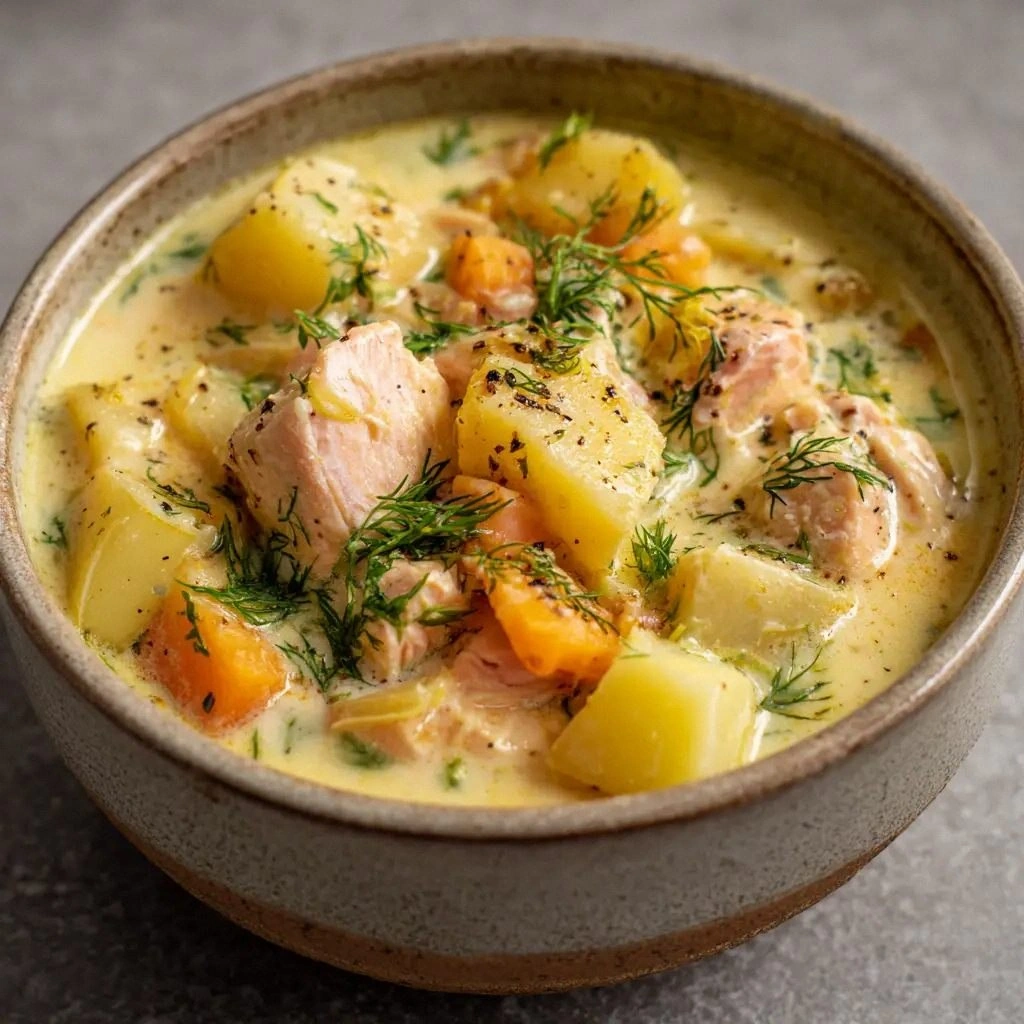
It started with a kitchen disaster that would have made most of us throw the pot in the trash. I was halfway through a “quick salmon chowder” when the broth began to boil over, splattering butter across the stove top like a greasy confetti. My friend, a culinary critic in disguise, laughed and challenged me: “Show me how you turn that mess into a masterpiece.” I stared at the sizzling mess, then grinned, because that’s when I knew I was about to rewrite the recipe book.
Picture the scene: a golden crust forming on the bottom of the pot, the aroma of caramelized onions dancing with the scent of fresh dill, and the sound of a gentle simmer that feels like a lullaby for the soul. The heat is just right—warm, not scorching—so the vegetables soften without losing their bite, and the salmon starts to release its silky flesh. I could almost taste the subtle umami, the creamy whisper of heavy cream, and the bright pop of dill. Every element is working in harmony, and the kitchen feels like a stage where flavors perform a duet.
I’ve tasted countless versions of salmon chowder, but this one feels like the missing piece in a puzzle I didn’t know I had. The broth is thick yet airy, the potatoes are tender without turning mushy, and the salmon stays flaky, not rubbery. The secret? A simple roux, a dash of cracked pepper, and the strategic timing of adding the salmon at the very last minute. That tiny tweak turns a good chowder into the best you’ll ever make at home, and I dare you to taste this and not go back for seconds.
By the end of this post, you’ll wonder how you ever cooked salmon chowder the old way. I’ll walk you through every single step, from the first butter melt to the final flourish of dill. If you’ve ever struggled with a chowder that’s too thin or too chunky, you’re not alone—and I’ve got the fix. Picture yourself pulling this out of the oven, the whole kitchen smelling incredible, and your guests asking for the recipe. Let’s dive in, and trust me, it’s worth every whisk.
What Makes This Version Stand Out
- Richness: The butter and flour roux create a velvety base that coats each ingredient like satin. The heavy cream adds a luxurious mouthfeel that elevates the chowder beyond ordinary.
- Texture: Potatoes are diced small enough to soften quickly yet large enough to hold their shape, preventing the soup from turning into a puree.
- Flavor Layering: Caramelized onions bring depth, while fresh dill injects a bright, herbal note that cuts through the richness.
- Timing: Adding the salmon at the very last minute preserves its delicate flakiness and prevents it from becoming overcooked.
- Visual Appeal: The golden crust on the bottom of the pot creates a dramatic presentation when ladled into bowls.
- Make‑Ahead Friendly: This chowder stores beautifully; the flavors meld even more after a day, making it ideal for busy weeknights.
- Ingredient Quality: Using a single pound of fresh, skinless salmon fillets guarantees a clean, buttery taste that stands out.
- Audience: Whether you’re feeding a crowd or a cozy family dinner, the proportions scale effortlessly.
Inside the Ingredient List
The Flavor Base
Butter is the foundation that creates a smooth, rich canvas. It also carries the aromas of onions and carrots, turning simple vegetables into a savory symphony. Skipping butter would leave the chowder flat and lifeless; every spoonful would taste like a bland soup. If you’re lactose intolerant, a plant‑based butter works, but be sure it has a mild flavor to keep the chowder from smelling too nutty.
The Texture Crew
Potatoes and carrots are the textural anchors of this chowder. They add body and bite, preventing the dish from becoming a soupy mess. Cutting potatoes into uniform cubes ensures even cooking and a pleasant chew. If you prefer a lower carb option, replace potatoes with cauliflower florets, but remember the flavor profile will shift slightly.
The Unexpected Star
Fresh dill is the unsung hero that breathes life into the chowder. Its bright, almost citrusy flavor cuts through the richness of butter and cream. Dill also has subtle health benefits, including digestive aid. If dill isn’t available, a splash of lemon zest can mimic its freshness, though it won’t provide the same herbal depth.
The Final Flourish
Cracked black pepper adds a subtle heat that balances the creamy base. It’s the finishing touch that keeps the chowder from feeling too sweet. A pinch of cayenne can be added for a spicy kick, but only if you enjoy a bit of heat. The salt, though small, is crucial for bringing all flavors together into a cohesive whole.
Everything’s prepped? Good. Let’s get into the real action, where the magic happens and the chowder starts to sing.
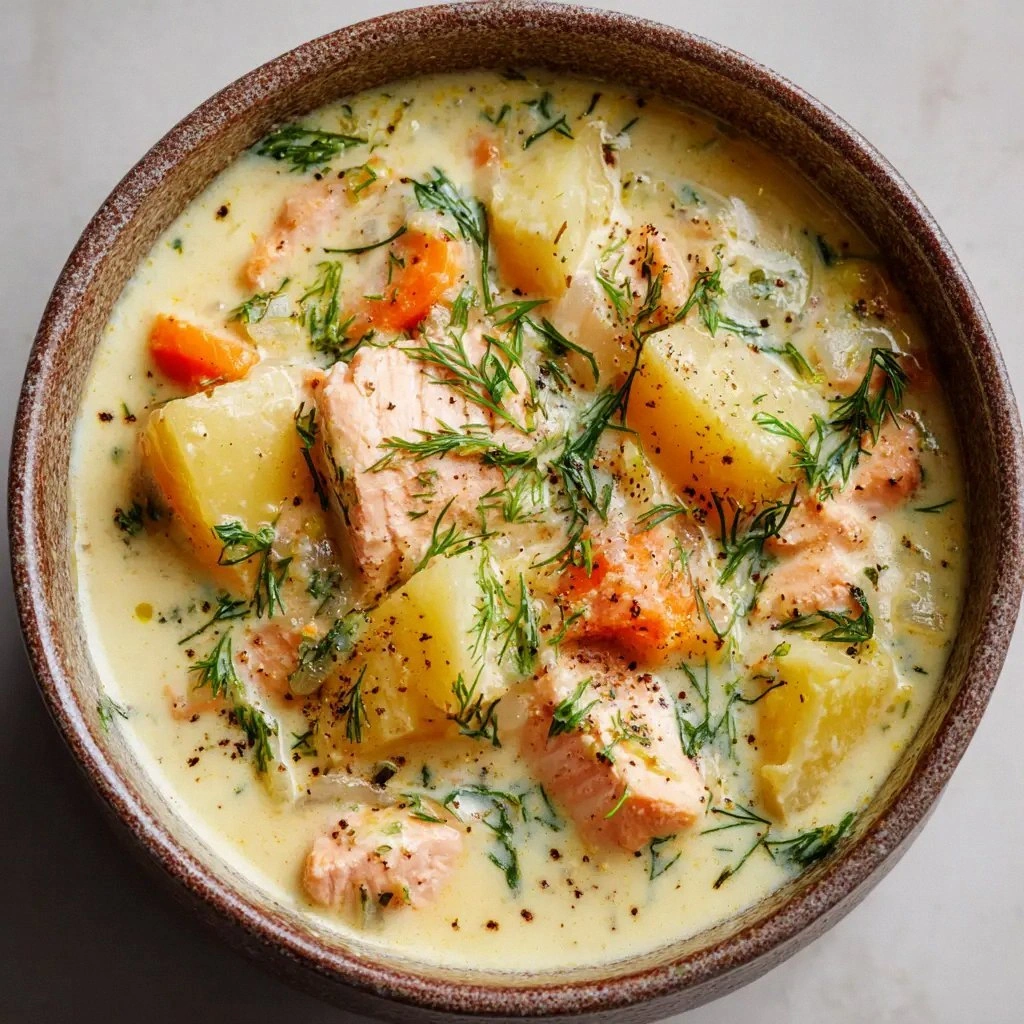
The Method — Step by Step
- Step 1: Melt the butter in a large stockpot over medium heat until it foams lightly. Add the flour and whisk constantly for 2 minutes until the mixture turns a light golden hue. This creates a roux that thickens the broth without clumping. The aroma should be nutty, signaling that the base is ready.
- Step 2: Stir in the diced onions and carrots, cooking until they soften and develop a gentle caramelization, about 5 minutes. Keep the heat moderate to avoid burning. The onions should turn translucent, and the carrots should begin to show a hint of color.
- Step 3: Gradually pour in the seafood broth while whisking vigorously to prevent lumps. Bring the mixture to a gentle simmer, then add the diced potatoes. Cover and let the soup cook for 10 minutes, or until the potatoes are tender yet firm.
- Step 4: Reduce the heat to low and stir in the heavy cream. Let the chowder simmer for an additional 5 minutes, allowing the flavors to meld. The broth should be silky, not thick, and should coat the back of a spoon.
- Step 5: Slice the salmon fillets into bite‑size pieces, season them lightly with salt and cracked pepper. Gently slide the salmon into the pot, ensuring it is submerged but not packed. Cover and let it cook for 4 minutes, or until the salmon flakes easily with a fork.
- Step 6: Sprinkle fresh dill over the chowder, stir gently, and let it sit for 1 minute. The dill’s aroma will intensify, giving the dish a fresh, herbal finish. Be careful not to stir too vigorously, as you don’t want to break the salmon pieces.
- Step 7: Taste the chowder and adjust seasoning if needed. A pinch more salt or pepper can brighten the flavors, but be cautious—over-seasoning can mask the delicate salmon.
- Step 8: Ladle the chowder into bowls, garnish with additional dill if desired, and serve hot. Pair it with crusty bread or a crisp salad for a complete meal. The result is a comforting bowl that feels like a warm hug.
That’s it — you did it. But hold on, I've got a few more tricks that'll take this to another level. Let’s explore how you can elevate the chowder, tweak it for different occasions, and keep it fresh for days.
Insider Tricks for Flawless Results
The Temperature Rule Nobody Follows
Cooking the broth at a steady low simmer, rather than a full boil, preserves the delicate flavors of the salmon and prevents the cream from curdling. I once let my pot boil, and the chowder turned into a lumpy mess. Keep the heat low, and you’ll have a silky, cohesive sauce that clings to each ingredient.
Why Your Nose Knows Best
Trust your nose when you’re tasting the chowder. The first aroma that hits you should be buttery, slightly sweet, and with a hint of dill. If you notice a burnt or overly sharp scent, it’s time to adjust the heat or add a splash of broth to balance it.
The 5-Minute Rest That Changes Everything
Once you’ve plated the chowder, let it rest for 5 minutes before serving. This short pause allows the flavors to settle and the cream to thicken slightly, giving the dish a luxurious mouthfeel. I’ve seen people rush to serve immediately, but the rest makes the chowder feel more refined.
The Secret Ingredient Swap
If you’re craving a slightly smoky flavor, add a teaspoon of smoked paprika to the roux. The paprika infuses the broth with depth without overpowering the salmon. Just remember to toast it lightly to release its oils.
The Perfect Garnish
A sprinkle of toasted breadcrumbs on top adds crunch and a subtle nutty flavor. Toast them in a dry skillet until golden, then sprinkle over each bowl. The contrast between crunchy and creamy is a game‑changer.
Creative Twists and Variations
This recipe is a playground. Here are some of my favorite ways to switch things up:
Smoky Chipotle Chowder
Add a teaspoon of chipotle powder to the roux for a smoky heat. Pair it with a splash of lime juice to cut through the richness. This version is perfect for a late‑night comfort meal.
Mediterranean Flair
Swap dill for fresh parsley and add a handful of sun‑dried tomatoes. Finish with a drizzle of extra‑virgin olive oil. The result is a bright, herbaceous chowder that feels like a Mediterranean breeze.
Seafood Medley
Include shrimp and scallops with the salmon for a luxurious seafood medley. Cook the shrimp separately and fold them in at the end. The chowder becomes a decadent banquet.
Low‑Carb Twist
Replace potatoes with cauliflower florets, and use a small amount of almond flour in the roux. This keeps the dish low in carbs while maintaining a creamy texture. It’s a great option for keto diners.
Herb Garden Upgrade
Add a mix of fresh herbs—rosemary, thyme, and basil—to the broth. The bouquet of herbs creates an aromatic explosion that elevates the chowder to gourmet status.
Storing and Bringing It Back to Life
Fridge Storage
Store the chowder in an airtight container in the refrigerator for up to 3 days. The flavors will deepen over time, making it even more delicious. When reheating, gently warm it on the stove, stirring frequently to keep it creamy.
Freezer Friendly
Freeze the chowder in freezer‑safe containers for up to 2 months. Thaw overnight in the refrigerator, then reheat on the stove with a splash of water to restore creaminess. The texture remains smooth, and the taste stays true.
Best Reheating Method
Reheat gently over low heat, stirring constantly. Add a tiny splash of water or broth to maintain a silky consistency. Avoid high heat, or the chowder will separate and lose its luxurious feel.