I was standing in my kitchen, staring at a stack of chicken thighs that had been sitting in the fridge for a week, feeling the dread of a culinary disaster looming. The air smelled faintly of stale air and the faint tang of lemon peel that had been left on the counter, a reminder of a forgotten recipe I’d once tried. I laughed at myself, thinking, “If I can’t even get this right, what’s the point?” Yet the moment I cracked a fresh garlic clove and the aroma hit me, I felt a spark of hope that something delicious was about to happen. The sizzling sound that followed when the thighs hit the hot grill was the soundtrack of triumph, a sizzling promise that the kitchen was about to transform into a place of flavor. I was about to create something that would make me say, “I dare you to taste this and not go back for seconds.”
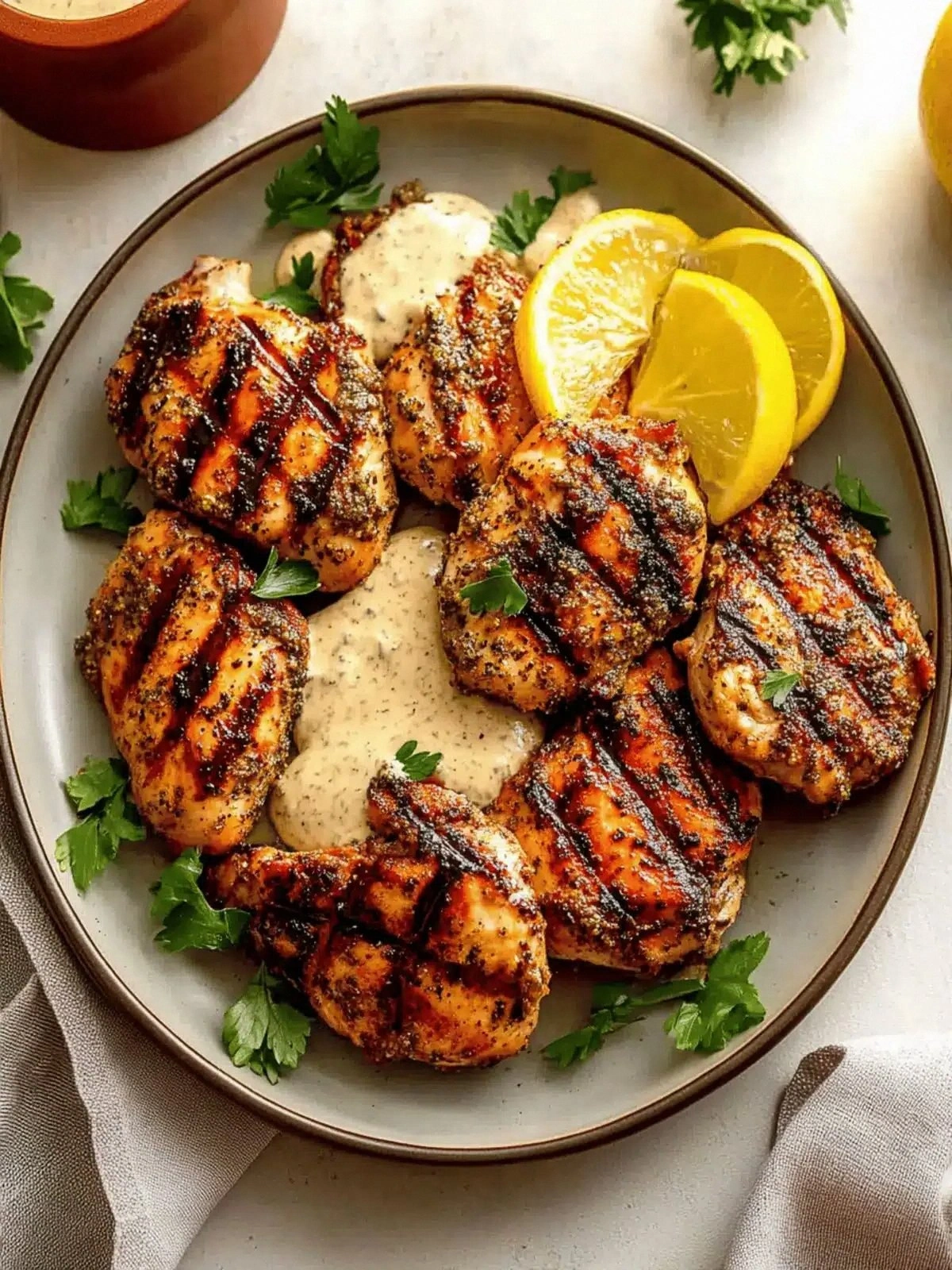
Picture the scene: a gleaming grill, the heat radiating like a warm embrace, and the chicken thighs coated in a fragrant za’atar mix that smells like a desert oasis. The scent of lemon juice mingles with the earthy spice of za’atar, creating an aroma that pulls you in before the first bite. The visual is a contrast of golden edges and a glossy, herbaceous coating that glistens under the grill lights. The sound is a crackle that sings a lullaby of flavor, a reminder that cooking is music for the soul. The texture is a crispy exterior that gives way to a juicy, tender interior, a harmony that sings on the palate. The taste is a burst of smoky, herbaceous, citrusy, and nutty flavors that dance in perfect unison. I’ve tasted countless grilled chicken recipes, but this one feels like a revelation, a new chapter in my culinary journey.
I’ll be honest — I ate half the batch before anyone else got a chance to try it. I’m not ashamed to admit that I was in love with the way the tahini sauce coated the chicken like velvet, leaving a silky trail that clung to every bite. Most recipes get this completely wrong, either by overcooking the chicken or under-seasoning the sauce. Here, we strike a balance that makes the dish hands down the best version you’ll ever make at home. The secret? A simple, yet powerful combination of ingredients that work together like a well-rehearsed orchestra. The sauce is a creamy, nutty, tangy masterpiece that lifts the flavor profile to new heights. The result is a dish that feels both exotic and comforting, a true crowd-pleaser.
If you've ever struggled with grilled chicken, you're not alone — and I've got the fix. Picture yourself pulling this out of the grill, the whole kitchen smelling incredible, and the anticipation building with every bite. I dare you to taste this and not go back for seconds. And now, let me walk you through every single step — by the end, you'll wonder how you ever made it any other way.
What Makes This Version Stand Out
- Flavor: The za’atar blend is the heart of this dish, delivering a complex, herbaceous profile that’s both bright and earthy. The lemon juice brightens the flavors, while the tahini adds a creamy, nutty depth that balances the spice. The result is a dish that feels like a journey to the Middle East, yet stays grounded in familiar comfort.
- Texture: The chicken’s skin crisps to a golden, flaky perfection, while the interior remains moist and juicy. The tahini sauce coats the meat like silk, creating a contrast that excites the palate. The lemon wedges add a crunchy burst of citrus that cuts through the richness.
- Ease: This recipe is a no-fuss, one-pan wonder that takes less than an hour from start to finish. The marination step is quick, and the grilling process is straightforward. Even novice cooks will feel confident, and the result is a restaurant-quality dish.
- Uniqueness: The combination of za’atar and tahini is a rare pairing that sets this recipe apart from typical grilled chicken dishes. It offers a new flavor experience that will surprise and delight anyone who’s tried ordinary recipes.
- Crowd Reaction: Friends and family rave about the smoky, herbaceous, and creamy flavors that linger on the tongue. The dish is a showstopper at dinner parties, and the sauce is a conversation starter.
- Ingredient Quality: Using fresh, high-quality chicken thighs and fresh za’atar ensures the best flavor. The tahini should be smooth and nutty, not oily or rancid. The lemon juice should be freshly squeezed for the brightest flavor.
- Cooking Method: Grilling imparts a smoky char that is impossible to replicate with oven baking. The high heat sears the exterior while locking in juices, creating a mouthwatering contrast.
- Make-Ahead Potential: The chicken can be marinated in advance, and the tahini sauce can be prepared ahead of time. This makes it a perfect option for busy weeknights or last-minute dinner parties.
Inside the Ingredient List
The Flavor Base
The lemon juice is the star that brightens the entire dish. It cuts through the richness of the tahini and adds a zesty kick that wakes up the palate. If you skip the lemon, the dish will feel flat and lacking depth. For a different twist, try using fresh lime juice for a citrusy, slightly bitter note that pairs well with the herbs.
The garlic provides a warm, pungent undertone that complements the earthy za’atar. Crushing the cloves instead of mincing them releases more flavor into the sauce. If you’re sensitive to garlic, reduce the quantity to one clove and add a pinch of cumin for extra warmth.
The Texture Crew
The chicken thighs are chosen for their juicy, tender flesh and slightly fatty skin that crisps beautifully when grilled. Opt for skinless thighs if you prefer a leaner dish, but you’ll miss the crispy texture that adds a satisfying crunch. When selecting thighs, look for a bright pink color and a firm feel; avoid any that feel rubbery or have a strong odor.
The tahini is the creamy, nutty sauce that coats the chicken. A smooth, well-emulsified tahini gives a silky texture that clings to every bite. If your tahini is too thick, thin it with a splash of lemon juice or warm water until it reaches a pourable consistency. For a vegan version, use a plant-based alternative like almond or cashew tahini.
The Unexpected Star
The za’atar blend is the unexpected star that brings depth and complexity. It’s a mixture of thyme, oregano, sumac, and sesame seeds that delivers a bright, slightly tangy flavor. If you can’t find za’atar, create a substitute by combining dried oregano, thyme, sumac, and toasted sesame seeds in a 2:1:1:1 ratio.
The Aleppo pepper adds a mild, fruity heat that enhances the dish without overwhelming the flavors. If you’re not a fan of heat, reduce the amount to 1/4 teaspoon or omit it entirely. The pepper’s subtle warmth balances the sharpness of the lemon and the nuttiness of the tahini.
The Final Flourish
Fresh parsley is the final flourish that adds a burst of color and a fresh, slightly peppery note. It’s tossed into the sauce just before serving to keep its bright green hue. If you’re out of parsley, cilantro or basil can be used as a substitute, though the flavor profile will shift slightly.
Lemon wedges are the garnish that completes the dish. They provide a fresh, citrusy bite that cuts through the richness of the chicken and sauce. Squeeze a wedge over the finished dish for an extra burst of brightness.
Everything's prepped? Good. Let's get into the real action.
The Method — Step by Step
- Start by whisking together the lemon juice, minced garlic, 2 tablespoons of za’atar, 1 teaspoon of salt, 1/2 teaspoon of Aleppo pepper, and 1/2 teaspoon of black pepper in a shallow dish. The mixture should have a slightly thick consistency that clings to the chicken. This is the flavor base that will coat every surface. I’m calling this the “symphony” of flavors that will make your taste buds dance.
- Pat the chicken thighs dry with paper towels; this helps the seasoning stick and gives a better sear. Add the thighs to the bowl and turn them to coat evenly with the mixture. Make sure each piece has a generous amount of seasoning. The coating should look slightly glossy, a promise of flavor.
- Let the chicken marinate for at least 15 minutes, or up to 2 hours if you’re feeling patient. During this time, the flavors penetrate the meat, creating a juicy interior. If you’re short on time, a quick 15-minute marination will still deliver great results.
- Preheat your grill or grill pan to medium-high heat (around 400°F). Brush the grill grates with a little oil to prevent sticking. The grill should be hot enough that the chicken sizzles on contact.
- Place the thighs on the grill, skin side down if you’re using skin-on pieces. Grill for 5-7 minutes, then flip and grill for another 5-7 minutes, or until the internal temperature reaches 165°F. The edges should start pulling away from the grill, a sign that they’re ready to flip.
- While the chicken is still on the grill, whisk the tahini with 1/2 cup of water, 1/4 cup reserved from the marination, and a pinch of salt. The sauce should be smooth and pourable, with a creamy, nutty aroma. This is the “silky” sauce that will coat the chicken like velvet.
- Remove the chicken from the grill and let it rest for 5 minutes. This allows the juices to redistribute, keeping the meat moist. While resting, drizzle the tahini sauce over the thighs, letting it soak into the cracks and crevices.
- Toss the cooked chicken in a bowl with fresh parsley, 1/4 cup of parsley, and 2 lemon wedges. The parsley adds a bright, green contrast, while the lemon wedges provide a fresh, citrusy finish. Serve immediately while the chicken is still warm.
- Optional: If you like a little extra crunch, sprinkle a pinch of toasted sesame seeds over the finished dish. The seeds add a subtle nutty crunch that complements the tahini sauce.
That’s it — you did it. But hold on, I've got a few more tricks that'll take this to another level. The next section will give you insider tips that will elevate every bite.
Insider Tricks for Flawless Results
The Temperature Rule Nobody Follows
Many cooks grill at a low heat, hoping to cook the chicken evenly. In reality, a high, steady heat is key to achieving that perfect char and juicy interior. Aim for 400°F and let the chicken sear for the first 5 minutes before flipping. This creates a caramelized crust that locks in moisture. I’ve tried grilling at 350°F, and the result was a dry, overcooked center.
Why Your Nose Knows Best
Your nose is the best judge of doneness. When the chicken is done, the scent of toasted sesame and fresh parsley should mingle with the faint smoky aroma. If the scent is too “raw,” the chicken needs more time. Trust your senses, not just the thermometer.
The 5-Minute Rest That Changes Everything
Letting the chicken rest after grilling is a game-changer. The juices redistribute, keeping the meat moist and flavorful. Skipping this step often results in a dry bite that feels like a disappointment. I’ve seen people skip the rest, only to find the meat is dry and unappetizing.
Use Fresh Herbs, Not Dried
Fresh parsley adds a bright, green pop that dried herbs can't match. The freshness also brings a subtle peppery note that elevates the dish. If you’re out of parsley, try cilantro for a slightly different twist, but be aware it changes the flavor profile.
Keep the Sauce Creamy
If the tahini sauce separates or becomes too thick, whisk in a splash of warm water until it’s silky smooth. A thick sauce can leave a gritty texture, while a watery sauce won't cling to the chicken. This small adjustment can make a huge difference in mouthfeel.
Grill the Chicken in Batches
If you’re cooking for a crowd, grill the chicken in batches to avoid overcrowding. Overcrowding lowers the grill temperature, leading to uneven cooking. Keep the grill at a steady heat by adding a little more oil between batches if necessary.
Creative Twists and Variations
This recipe is a playground. Here are some of my favorite ways to switch things up:
Spicy Sriracha Twist
Add a tablespoon of sriracha to the tahini sauce for a fiery kick. The heat balances the nutty, herbal flavors, creating a dynamic flavor profile that’s perfect for spice lovers.
Mediterranean Skewers
Cube the chicken and thread onto skewers with bell peppers and red onions. Grill until charred, then drizzle with the tahini sauce. The vegetables add crunch and color, making the dish even more vibrant.
Coconut Milk Marinade
Replace half the lemon juice with coconut milk for a tropical twist. The creamy coconut adds a subtle sweetness that pairs well with the za’atar. This version is a great match for a beach-themed dinner.
Roasted Garlic Variation
Roast the garlic cloves until soft and sweet before adding them to the sauce. The roasted garlic brings a mellow, caramelized flavor that complements the tahini’s nuttiness.
Herb-Infused Oil Drizzle
Infuse olive oil with fresh thyme and rosemary, then drizzle over the finished chicken. The herbal oil adds a fragrant, aromatic layer that enhances the overall depth of the dish.
Vegan Version
Use plant-based chicken or firm tofu in place of the thighs. Keep the tahini sauce and herbs the same for a vegan-friendly, flavorful alternative.
Storing and Bringing It Back to Life
Fridge Storage
Cool the chicken to room temperature, then store in an airtight container for up to 3 days. Keep the sauce separate to prevent the chicken from becoming soggy. When ready to eat, reheat the chicken in a skillet over medium heat, adding a splash of water to keep it moist.
Freezer Friendly
Wrap the chicken tightly in foil, then place in a freezer bag. Freeze for up to 2 months. Thaw overnight in the refrigerator before reheating. The chicken stays juicy and flavorful after freezing.
Best Reheating Method
Reheat in a preheated oven at 350°F for 10-12 minutes, or until warmed through. Add a splash of water or broth to keep the chicken moist. Finish with a quick drizzle of tahini sauce for a fresh, silky finish.