Picture this: it’s a cold Tuesday night, the kind where the wind whistles through the cracks in your windows and every bone in your body is begging for something warm, comforting, and downright indulgent. I was hunched over a half‑cooked lasagna that had somehow turned into a culinary catastrophe when a friend dared me to create the ultimate comfort food using only what I had in the pantry. I grabbed a sack of russet potatoes, a slab of cheddar, and a pack of bacon, and the rest is a deliciously chaotic story of trial, error, and a whole lot of cheese‑loving madness. That night, I learned that a simple baked potato can become a masterpiece if you treat it with the respect it deserves.
The kitchen was alive with the crackle of bacon hitting the hot pan, a sound that made my stomach do a little happy dance. The air filled with the smoky perfume of pork, mingling with the earthy scent of potatoes that had just been tossed in a glug of extra‑virgin olive oil and a sprinkle of sea salt. As the potatoes baked, their skins turned a golden‑crisp that reminded me of a sun‑kissed beach, while the interiors puffed up fluffy as clouds on a summer day. I could already taste the buttery melt of cheddar, the cool tang of sour cream, and the bright bite of fresh chives—each element promising a symphony of flavors that would make even the most stoic food critic swoon.
Most baked potato recipes get this completely wrong: they either drown the potato in toppings, losing that essential contrast between crispy skin and soft interior, or they skimp on flavor, leaving you with a bland, lonely spud. This version, however, is a game‑changer. I’ve honed every step to coax the perfect texture—crispy skin that shatters like thin ice, a buttery fluff that yields to the fork, and a cheesy, bacon‑laden crown that’s practically begging for a second helping. I dare you to taste this and not go back for seconds; the combination is so addictive it might just become your new go‑to comfort dish.
What truly sets this recipe apart is a tiny, unexpected twist: a quick brush of olive oil mixed with a pinch of smoked paprika before baking, which creates a subtle, smoky crust that amplifies the bacon’s flavor without overwhelming it. And let’s not forget the finishing flourish of chives, adding a pop of color and a fresh bite that balances the richness. I’ll be honest—I ate half the batch before anyone else got a chance to try it, and that’s a testament to how irresistible this dish really is. Let me walk you through every single step — by the end, you’ll wonder how you ever made it any other way.
What Makes This Version Stand Out
- Taste: The marriage of sharp cheddar, smoky bacon, and a whisper of olive‑oil‑infused paprika creates a flavor profile that’s bold yet perfectly balanced.
- Texture: Crispy, crackly skin meets pillowy interior, topped with a creamy, tangy sour‑cream swirl that feels like velvet on the tongue.
- Simplicity: With just seven core ingredients and a handful of pantry staples, you can pull this off on a weeknight without a grocery run.
- Uniqueness: The paprika‑olive oil brush adds a subtle smoky depth that most recipes completely overlook.
- Crowd Reaction: Friends and family declare it “the best baked potato ever” and demand the recipe before the plate even hits the table.
- Ingredient Quality: Using Russet potatoes and sharp cheddar ensures every bite is robust and satisfying.
- Cooking Method: High‑heat roasting locks in moisture while the oil‑paprika coating creates that coveted crunch.
- Make‑Ahead Potential: Prep the potatoes ahead of time, store them, and finish with toppings when you’re ready to serve.
Inside the Ingredient List
The Flavor Base
Russet potatoes: These hearty potatoes are perfect for baking, giving that crispy skin and fluffy interior. Their high starch content means they’ll become light as a feather once baked, while the skin crisps up like a golden crust. Skipping them for a waxy variety would leave you with a soggy, less satisfying bite. Pro tip: Choose potatoes that feel heavy for their size; that’s a sign of moisture and starch.
The Texture Crew
Extra virgin olive oil: This not only adds flavor but helps achieve that golden crust on the potatoes. The oil coats the skin, allowing it to brown evenly and prevents it from drying out. If you use a lower‑quality oil, you’ll miss out on the subtle fruitiness that lifts the whole dish. Swap: Avocado oil works great for an even higher smoke point.
Salt and pepper: Essential seasonings that enhance the potatoes’ natural flavors. A generous pinch of kosher salt draws out moisture, creating a crispier skin, while freshly cracked black pepper adds a gentle heat. Forgetting to season the skin is a rookie mistake that leads to blandness. Alternative: Try smoked sea salt for an extra layer of depth.
The Unexpected Star
Shredded cheddar cheese: The star of the show! Go for sharp cheddar to elevate the taste. As it melts, it creates a glossy, gooey blanket that binds the bacon and sour cream together. If you use mild cheddar, you’ll lose that punchy tang that makes every bite exciting. Alternative: A blend of cheddar and Monterey Jack adds a creamy stretch.
The Final Flourish
Bacon: Cooked crispy, this adds that irresistible crunch and smoky flavor. You can use turkey bacon or a vegetarian alternative if you prefer, but traditional pork bacon delivers the richest taste. Crumbling the bacon after it cools keeps the pieces from getting soggy. Pro tip: Bake bacon on a wire rack over a sheet pan for even crispness and easy cleanup.
Sour cream: A dollop of creamy goodness on top adds a cool contrast to the hot potatoes. Its slight tang cuts through the richness of the cheese and bacon, preventing the dish from feeling heavy. If you’re dairy‑free, Greek yogurt is a sturdy substitute that still offers that creamy tang.
Fresh chives or green onions: These not only provide a pop of color but also that fresh bite that ties the dish together. Their mild onion flavor brightens each mouthful and adds a subtle herbaceous note. If you can’t find chives, thinly sliced scallions work just as well.
Everything's prepped? Good. Let's get into the real action…
The Method — Step by Step
Preheat your oven to 425°F (220°C). While the oven heats, give each Russet potato a good scrub under cold water, then pat them dry with a clean towel. This is the moment of truth: a dry skin is the secret to that coveted crunch. Once dry, pierce each potato with a fork about six times to allow steam to escape; you don’t want them exploding like fireworks in the oven.
In a small bowl, whisk together 2 tablespoons of extra‑virgin olive oil, ½ teaspoon smoked paprika, and a pinch of kosher salt. Brush this mixture all over the potatoes, making sure every nook and cranny gets a coating. The oil acts like a golden lacquer, while the paprika adds a whisper of smoky depth that will amplify the bacon later.
Kitchen Hack: Use a pastry brush for an even coat; a drizzle can leave streaks that burn unevenly.Place the potatoes directly on the middle oven rack with a baking sheet on the lower rack to catch drips. Roast for 45‑55 minutes, turning once halfway through. You’ll know they’re done when the skins are a deep golden brown and a fork slides in with barely resistance. The edges will start pulling away from the skin, a visual cue that the interior is perfectly fluffy.
While the potatoes bake, cook the bacon. Lay the strips on a wire rack set over a rimmed baking sheet and bake at 400°F (200°C) for 12‑15 minutes, or until they reach your desired crispness. This method renders the fat away, leaving you with perfectly crunchy bacon without the mess of stovetop splatter. Once done, transfer to a paper‑towel‑lined plate and crumble while still warm.
When the potatoes are baked, remove them from the oven and let them rest for 5 minutes. This short rest lets the steam settle, preventing the cheese from sliding off too quickly. Slice each potato lengthwise, being careful not to cut all the way through—think of it as opening a book, not tearing it apart.
Using a fork, gently fluff the interior of each potato, creating a little well in the center. This is where the magic happens: the fork aerates the potato, allowing the cheese to melt into every crevice. Sprinkle a generous handful of shredded sharp cheddar into the well; the heat from the potato will start melting it instantly.
Return the potatoes to the oven for an additional 5‑7 minutes, just until the cheese bubbles and turns a beautiful amber. Keep a close eye—cheese can go from melty to burnt in seconds. Watch Out: If you leave them too long, the cheese will caramelize and become bitter, ruining the delicate balance.
Watch Out: The cheese can over‑brown quickly; set a timer and stay at the kitchen door.While the cheese melts, whisk together ½ cup sour cream with a pinch of salt and pepper. This creamy mixture will act as a cool counterpoint to the hot, cheesy potato. Once the cheese is perfectly melted, dollop a generous spoonful of the sour‑cream mixture on each potato, letting it cascade down the sides.
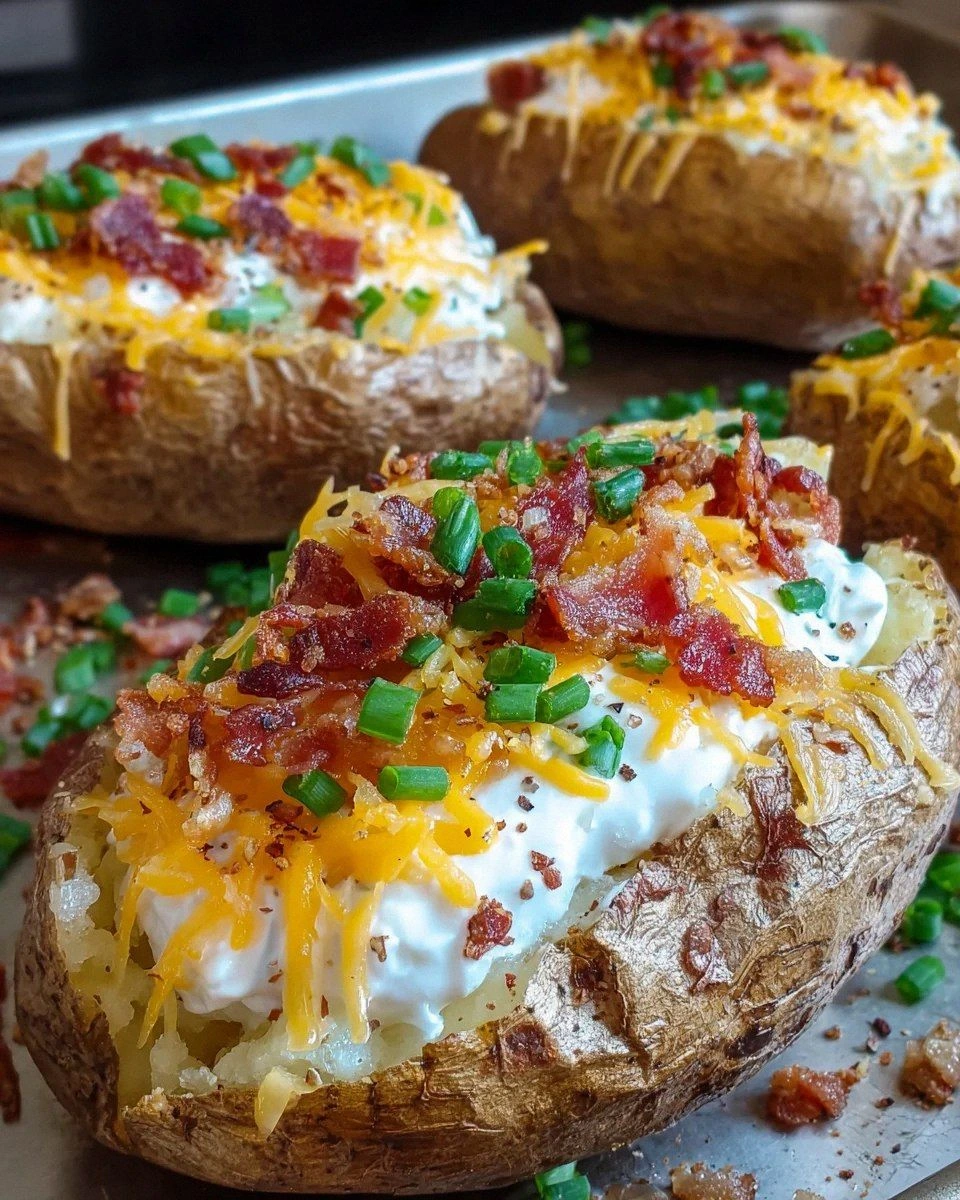
Finish each masterpiece with a scattering of crumbled bacon, a drizzle of any remaining olive‑oil‑paprika glaze, and a sprinkle of fresh chives or green onions. The chives add a bright, herbaceous pop that cuts through the richness, while the extra drizzle of oil brings the flavors together in a glossy finish. Serve immediately while the skins are still crackling.
Kitchen Hack: Keep a small bowl of extra chives on the side for guests to add their own fresh burst.
That's it — you did it. But hold on, I've got a few more tricks that'll take this to another level…
Insider Tricks for Flawless Results
The Temperature Rule Nobody Follows
Most home cooks bake potatoes at 350°F, thinking “low and slow” is the safest route. In reality, a hot oven (425°F) creates a rapid Maillard reaction on the skin, giving you that coveted crunch while keeping the interior airy. I once tried the low‑heat method and ended up with soggy skins that felt more like boiled potatoes than baked. So crank that heat up, and trust me—the results are worth the brief extra vigilance.
Why Your Nose Knows Best
When the potatoes are nearing completion, pay attention to the aroma. A sweet, earthy scent signals the starches are caramelizing, while a faint smoky note tells you the paprika‑oil coating is doing its job. If you smell a burnt odor, pull them out immediately; over‑browning can turn a delicious crust into a bitter disappointment.
The 5‑Minute Rest That Changes Everything
After the initial bake, letting the potatoes sit for five minutes is a tiny step that makes a massive difference. This rest allows the steam inside to redistribute, ensuring the interior stays fluffy instead of drying out when you slice it open. Skipping this pause is the culinary equivalent of skipping the “let it rest” step for a steak—your texture will suffer.
Cheese Melt Mastery
Don’t just dump a mountain of cheese and hope for the best. Instead, sprinkle it evenly and give it a quick 5‑minute bake. The cheese will melt into a silky blanket that clings to every forkful. I once tried adding cheese after the final bake, and it just sat on top, never truly integrating—resulting in a clumpy, uneven bite.
Crunchy Bacon, Every Time
Baking bacon on a wire rack is my secret weapon. It lets the fat drip away, preventing the bacon from sitting in its own grease, which can make it soggy. The result? Bacon that stays crisp even after sitting on the hot potato for a few minutes. If you’re in a rush, you can microwave the bacon for 2‑3 minutes, but you’ll lose the oven‑level crunch.
Creative Twists and Variations
This recipe is a playground. Here are some of my favorite ways to switch things up:
Tex‑Mex Explosion
Swap cheddar for pepper jack, add a spoonful of black beans, and sprinkle chopped jalapeños on top. The heat from the jalapeños pairs beautifully with the smoky bacon, turning the dish into a fiesta for your taste buds.
Herb‑Infused Delight
Mix fresh rosemary and thyme into the olive‑oil‑paprika brush before coating the potatoes. Finish with a drizzle of herb‑infused butter for an earthy, aromatic twist that feels like a rustic countryside dinner.
Loaded Veggie Version
Replace bacon with sautéed mushrooms and caramelized onions, and use a blend of mozzarella and gouda for the cheese. This vegetarian spin keeps the indulgence while adding umami depth from the mushrooms.
Spicy Korean Kick
Use gochujang (Korean chili paste) mixed into the sour cream, and top with kimchi and a sprinkle of toasted sesame seeds. The tangy, spicy, and slightly fermented flavors create a bold, unforgettable experience.
Breakfast‑All‑Day
Fold in a scrambled‑egg mixture into the potato interior before adding cheese, and garnish with a dash of hot sauce. This turns the humble baked potato into a hearty breakfast that can power you through any afternoon slump.
Cheesy Bacon Bomb
Layer a second thin slice of potato on top of the first, sandwiching extra cheese and bacon between them, then bake as usual. The result is a double‑stuffed, ooey‑gooey masterpiece that will have everyone reaching for seconds.
Storing and Bringing It Back to Life
Fridge Storage
Let the baked potatoes cool completely, then wrap each individually in foil or place in an airtight container. They’ll keep fresh for up to 4 days. When you’re ready to reheat, unwrap and place them on a baking sheet, then bake at 350°F for 15‑20 minutes until heated through.
Freezer Friendly
Freeze the baked potatoes (without toppings) on a parchment‑lined tray for 2‑3 hours, then transfer to a zip‑top bag. They’ll stay good for up to 3 months. To reheat, bake straight from frozen at 400°F for 25‑30 minutes, then add your cheese, bacon, and sour cream afterwards.
Best Reheating Method
For ultimate crispiness, reheat in a preheated oven rather than a microwave. Add a tiny splash of water (about a teaspoon) to the potato before covering with foil; the steam revives the fluffy interior while the skin regains its crunch. Finish under the broiler for 2 minutes to re‑melt the cheese to perfection.