I still remember the carnage of my first attempt at pineapple pork. Picture this: a frantic Tuesday night, a rumbling stomach, and a misguided belief that I could just "wing it" with whatever lurked in my pantry. I hacked up a sad can of pineapple rings, dumped in some random pork loin, sprinkled brown sugar like confetti, and prayed to the kitchen gods. Six hours later I cracked open the slow cooker and met a watery, stringy, soul-crushing disappointment. The pork squeaked when I chewed it. The pineapple tasted like it had been stewing in regret. My dinner guests—two roommates lured by the promise of free food—took one polite bite and suddenly remembered urgent laundry duties. I ate three bowls anyway, because stubbornness runs deep in my veins, but I vowed I would never again be defeated by tropical fruit and pig.
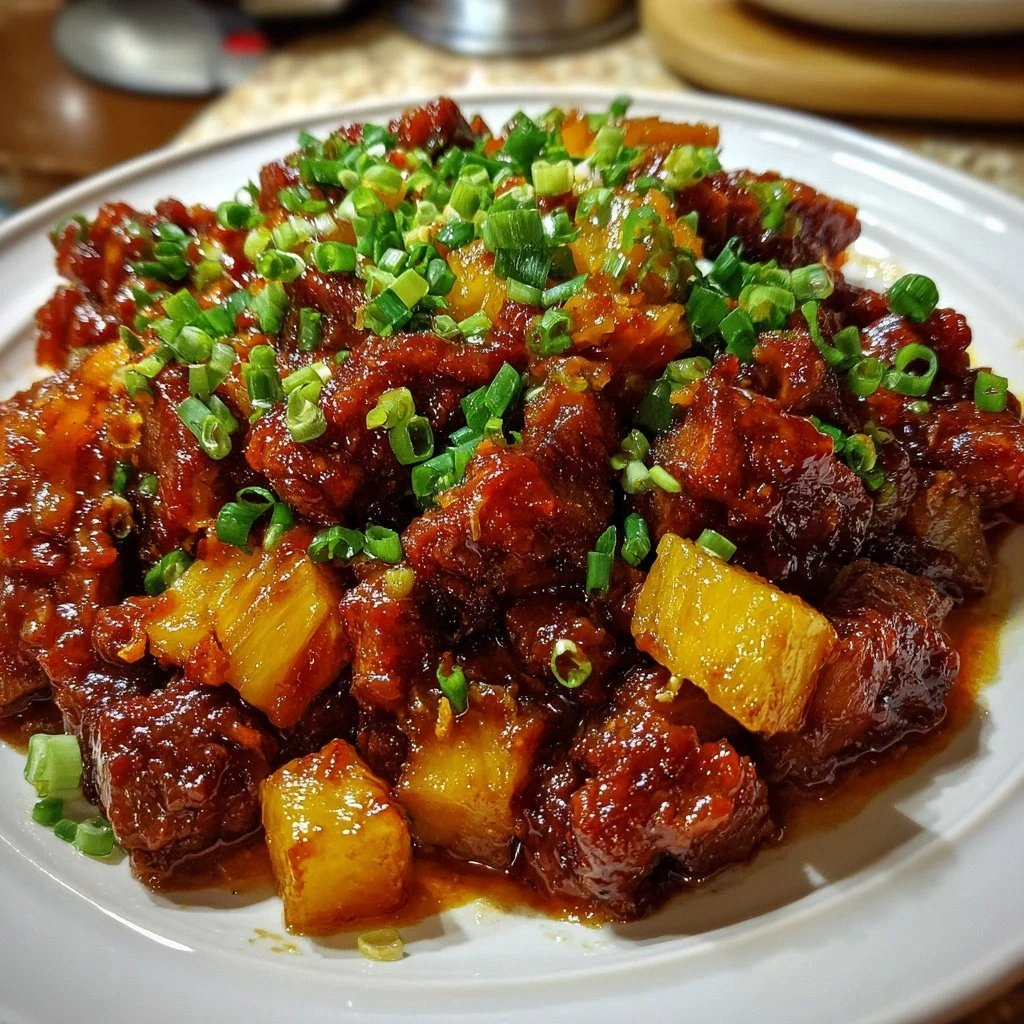
Fast-forward through three months of obsessive testing, a dozen butcher-counter heart-to-hearts, and one accidental fire-alarm incident involving caramelized sugar and a ceiling fan. I finally cracked the code. The recipe you're about to make is the culmination of that deliciously obsessive journey: melt-apart pork shoulder luxuriating in a glossy, sweet-savory sauce that tastes like a Hawaiian sunset decided to take up residence in your crockpot. The pineapple doesn't just sit there looking pretty—it melts into the juices, lending brightness and tang, while brown sugar and soy sauce perform a slow, saucy tango that ends in fireworks. The aroma alone has converted self-proclaimed pineapple skeptics into repeat offenders.
Here's the kicker—this version requires barely fifteen minutes of your actual attention. The slow cooker does the heavy lifting while you're off conquering board meetings, car-pool lines, or Netflix queues. And because I'm a firm believer in culinary overachievement, I'm also handing you the keys to leftovers that taste even better the next day, plus five game-changing variations that'll rescue you from dinner boredom for months. No rubbery pork, no bland broth, no sad-canned-fruit vibes. Just fork-tender magic that'll make you look like a kitchen wizard even if your usual specialty is toast.
Let me walk you through every single step—by the end, you'll wonder how you ever made it any other way.
What Makes This Version Stand Out
Tenderloin Troublemakers: Most recipes tell you to use pork tenderloin for pineapple pork. That advice is culinary sabotage. Tenderloin dries out faster than gossip spreads at book club. I'm team pork shoulder (or Boston butt), a marbled champion that bathes in slow heat until it collapses into shreddable silk. The connective tissue melts, the fat renders, and you get strands so juicy they basically self-sauce.
Pineapple Power Move: Canned pineapple chunks work, but I'm picky about the juice. Buy the variety packed in 100% pineapple juice—no heavy syrup, no fake "pineapple drink." That juice becomes your built-in braising liquid, already pre-seasoned by nature. Fresh pineapple? Even better. Either way, save half the fruit to add late in the game so you get bright pops of texture alongside the jammy pieces that dissolve into the gravy.
Layered Sweetness: Brown sugar alone can feel flat. I blend dark brown sugar for molasses depth with a tablespoon of honey for floral glide. The combo caramelizes gently in the crock, creating a lacquer that glides over each pork fiber like edible velvet. You could use white sugar in a pinch, but your taste buds will know you cut corners, and they will judge you.
Soy Sauce Umami Bomb: A generous splash of good soy sauce (I reach for low-sodium so I control the salt) adds that mysterious savory undertone. It's the difference between a one-note sweet glaze and a complex sauce that keeps people guessing—and fork-happy. Tamari or coconut aminos play nicely if you're gluten-free; just adjust salt later.
Aromatic Wake-Up Call: Fresh ginger and garlic aren't optional garnishes here—they're co-stars. Ginger's citrus-peppery heat slices through the richness, while garlic mellows into mellow candy-like nuggets. Skip the powdered versions. Fresh takes ninety seconds to prep and tastes like you hired a professional flavor coach.
Thickening Sorcery: Nobody misses the watery puddle when you finish the sauce with a quick cornstarch slurry. You swirl it in at the end, crank the cooker to high, and in minutes you're spooning glossy gravy that clings like it majored in hugging. It's the final polish that turns rustic into restaurant-worthy.
Alright, let's break down exactly what goes into this masterpiece...
Inside the Ingredient List
The Flavor Base
Pork shoulder (sometimes labeled Boston butt) carries the show. You want a hunk marbled with creamy white streaks; that intramuscular fat is built-in basting butter. Three pounds feeds four generously, five if you're stretching with rice. Trim the thickest external fat cap—no need to get surgical, just remove the hard waxy layer so the seasonings penetrate. Leave some behind because rendered pork fat plus pineapple equals liquid gold. If you can only find picnic shoulder, that works, but expect a slightly gamier bite and a few more connective bits to pick out.
Pineapple pieces are the co-lead. Canned chunks in juice save effort and deliver consistency. Fresh pineapple offers brighter acidity—slice off the skin, core it, and cut into one-inch cubes. You'll need about four cups total. Save the cores: simmer them with a cinnamon stick for a zero-waste tropical agua fresca while your pork bubbles away. Avoid pre-sweetened frozen pineapple; it's been blanched and often tastes like candy jewelry.
The Texture Crew
Brown sugar teams up with soy sauce to create that sweet-salty balance that makes Hawaiian pizza so addictive (yes, I went there). Dark brown sugar has extra molasses, so the sauce takes on subtle toffee notes. Light brown works fine, and in a desperate moment you could sub coconut sugar—it just won't melt quite as smoothly. Honey rounds the edges, but maple syrup can pinch-hit with a breakfast-y vibe that feels surprisingly sophisticated.
Garlic and ginger form the aromatic backbone. Smash the garlic cloves first to release allicin, then mince so they dissolve into the gravy. Peel ginger with the edge of a spoon—honestly the best life skill I've ever taught my nephew—and grate it fine. The goal is flavor dispersion, not fibrous surprises. Dried ginger tastes dusty here; fresh is non-negotiable unless you enjoy disappointment.
The Unexpected Star
Cornstarch might seem boring, but it's your ticket to spoon-coating glory. Mix it with cold water (equal parts) until it looks like whole milk. Add too early and it'll lose thickening power; too late and you'll taste raw starch. I toss it in during the last twenty minutes, crank the slow cooker to high, and watch the sauce bloom into glossy lava. Arrowroot subs one-for-one if you're grain-free, though the shine is slightly less mirror-like.
A tiny splash of rice vinegar at the end lifts the whole dish. Acid brightens the brown sugar, sharpens the pineapple, and keeps your palate perked for bite number fifty-seven—which absolutely will happen. No rice vinegar? A squeeze of lime or even a teaspoon of plain white vinegar works, but go easy; you want a flirtation, not a chemistry experiment.
The Final Flourish
Green onions deliver color, crunch, and a gentle onion perfume without the tear gas effect. Slice them on a bias for restaurant swagger. If green onions aren't in the crisper, thin rings of red onion soaked in ice water for ten minutes give a similar snap with a pop of color. Sesame seeds add nutty toastiness; toast them in a dry pan for sixty seconds and they'll taste ten times more expensive.
Everything's prepped? Good. Let's get into the real action...
The Method — Step by Step
- Pat the pork shoulder cubes dry with paper towels like you're blotting lipstick—moisture is the enemy of browning. Season generously with salt and pepper; think "snow-dusted driveway" levels. Heat a heavy skillet over medium-high until a flick of water sizzles like a firecracker. Sear the pork in batches, two minutes per side, until you get chestnut crusts. This Maillard magic pumps fond into the pan and layers deep flavor into the final dish. Don't crowd or you'll steam the meat; nobody invited soggy pork to this party.
- While the pork sizzles, whisk together pineapple juice (drained from the can or squeezed from the core), brown sugar, soy sauce, minced garlic, and grated ginger. Taste it—yes, it's drinkable. You want a balance that zings sweet first, then finishes salty. Adjust with a teaspoon more sugar or soy; your tongue is smarter than any recipe card. Pour this elixir into the slow cooker insert; it should smell like a beach vacation collided with a steakhouse.
- Transfer the seared pork into the slow cooker, nestling each piece so it's halfway submerged. Scatter half the pineapple chunks over the top; reserve the rest for later. These early pieces will melt into the sauce, while the later ones stay perky. Lid on, set to low for eight hours or high for four. Walk away, go live your life, but maybe set an alarm so you don't forget you have dinner happening. Trust me, the first time I made this I binge-watched an entire season and remembered at 2 a.m.—best midnight snack ever.
- At the three-hour mark (low) or one-and-a-half-hour mark (high), give the pot a gentle stir. The pork edges should look relaxed, like they're settling into a hammock. If the liquid seems low, splash in a quarter-cup of chicken broth or water, but don't drown it; you're braising, not boiling. Resist flipping every piece—let the heat stay consistent. Sneak a forkful if you must; it's already tasty but needs more time to transcend.
- When the countdown hits thirty minutes left, prep your cornstarch slurry: one tablespoon cornstarch plus one tablespoon cold water, stirred until smooth. Turn the slow cooker to high if it isn't already. Stir in the slurry along with the reserved pineapple chunks. Lay the lid slightly askew so steam escapes; this reduction step concentrates flavor and thickens sauce. Watch it transform from brothy to velvety—pure kitchen magic.
- While the sauce thickens, taste and adjust seasoning. Need brightness? Add a teaspoon of rice vinegar. Too sweet? A splash more soy sauce balances it. Salt should make the pineapple pop, not pucker. Remember: flavors concentrate as liquid evaporates, so under-season slightly now. The pork should shred with a gentle nudge; if it resists, give it another twenty minutes.
- Once the sauce coats the back of a spoon like thin gravy, kill the heat and let the pot rest five minutes. This pause lets the cornstarch finish gelling and prevents scorched tongues. Scatter sliced green onions and toasted sesame seeds over the top for color and crunch. Serve directly from the crock for family-style comfort, or plate over steamed rice, cauliflower rice, or buttered noodles. Stand back and accept the applause.
That's it—you did it. But hold on, I've got a few more tricks that'll take this to another level...
Insider Tricks for Flawless Results
The Temperature Rule Nobody Follows
Internal temp matters more than clock time. Pork shoulder hits shreddable nirvana around 195°F (90°C). If you own an instant-read thermometer, plunge it into the thickest cube at hour seven (low) or hour three (high). Anything under 190°F and you'll tug like floss; anything over 205°F turns cottony. When it slides in like butter, you're golden. No thermometer? Use the fork-twist test—meat should separate into delicate strands with gentle pressure.
Why Your Nose Knows Best
Trust your olfactory factory. When the sauce is properly reduced, your house will smell like caramelized pineapple meets smoky pork with a soy glaze—sweet, salty, and faintly nutty. If you detect sharp vinegar or raw garlic, the flavors haven't married yet; give it another fifteen minutes. Conversely, if you smell scorched sugar, the bottom is burning—reduce heat and stir gently. A friend once asked why her batch smelled like burnt marshmallows; she had her cooker on "warm" instead of "low" and the sugars cremated. Don't be that friend.
The 5-Minute Rest That Changes Everything
This step feels optional but separates good from legendary. Once the sauce thickens, switch the cooker to "warm," crack the lid, and walk away for five. Cornstarch continues swelling, flavors mingle, and the temperature drops to that perfect "I can shovel this into my face" zone. Skip it and you risk tongue blisters and runny sauce. I use the time to set the table, pour beverages, and remind everyone to wash their hands—because hygiene is sexy.
Make-Ahead Magic
This recipe doubles like a dream and freezes like a champion. Cook a double batch, cool completely, and portion into freezer bags laid flat for easy stacking. Thaw overnight in the fridge, then warm slowly with a splash of broth. The pineapple flavor intensifies, and the pork soaks up sauce like a sponge. I've served this at backyard luaus straight from the freezer stash—guests assumed I cooked all day. Your secret is safe with me.
Creative Twists and Variations
This recipe is a playground. Here are some of my favorite ways to switch things up:
Korean Fire-Kicker
Whisk two tablespoons gochujang into the sauce for a sweet-spicy glaze that glows ruby red. Swap half the pineapple juice for Korean pear nectar—it's subtle but adds authentic fruit sweetness found in classic bulgogi. Finish with toasted sesame seeds and julienned perilla leaves if you can find them. Serve wrapped in crisp lettuce cups with a blob of kimchi. Heat-seekers will weep with joy.
Caribbean Rum Runner
Add a shot of dark rum and a teaspoon of allspice to the braising liquid. Replace brown sugar with half sugar and half molasses for deeper island vibes. Stir in a handful of diced bell pepper during the last hour for color. Serve over coconut rice and garnish with fresh cilantro and a wedge of lime. Close your eyes and you're on a beach in Jamaica—minus the sand in your shoes.
Teriyaki Fusion
Sub mirin for half the soy sauce and add a strip of orange zest. Skip cornstarch and instead reduce the finished sauce in a skillet until syrupy for true teriyaki lacquer. Sprinkle with toasted sesame and thin-sliced scallions. Kids inhale this version; adults hoard leftovers for lunch. I once doubled the glaze and sold it in mason jars at a fundraiser—sold out in twenty minutes.
Smoky Bourbon Cowboy
Deglaze the searing pan with two ounces of bourbon, scraping up browned bits, then pour everything into the slow cooker. Add a teaspoon of smoked paprika and swap dark brown sugar for light plus a tablespoon of molasses. Finish with chopped pickled jalapeños for sweet-heat pop. Serve over grits or mashed potatoes for a Southern-Tropical mash-up that'll earn you a cowboy hat of honor.
Light & Zesty Summer
Use pork tenderloin (heresy, I know) but cut cooking time to three hours on low, checking at two. Replace half the pineapple with mango chunks and add the zest of one lime. Finish with fresh mint and serve over baby spinach for a warm salad vibe. It's bright, lower-calorie, and perfect for patio nights when heavy food feels oppressive. Just promise me you'll still make the real version when sweater weather returns.
Storing and Bringing It Back to Life
Fridge Storage
Cool leftovers within two hours and refrigerate in airtight containers—glass locks flavors best and prevents that weird refrigerator aftertaste. Stored properly, pineapple pork keeps up to four days, though it rarely survives that long in my house. Keep sauce and meat submerged; exposure equals dryness. If you have extra sauce alone, jar it and drizzle over roasted veggies later in the week. Reheat gently on the stovetop or in the microwave at 70% power, stirring midway.
Freezer Friendly
Freeze in meal-size portions—about two cups feeds two adults over rice. Use heavy-duty freezer bags; squeeze out excess air, label, and freeze flat for quick thawing. Good for three months, though flavor peaks around six weeks. Thaw overnight in the fridge, never on the counter (food safety 101). If you're in a rush, submerge the sealed bag in cold water, changing the water every thirty minutes. Once thawed, consume within twenty-four hours and never refreeze.
Best Reheating Method
Stovetop wins every time: place pork and sauce in a skillet, add a splash of broth or pineapple juice, cover, and warm over medium-low, stirring occasionally until heated through—about eight minutes. Microwave works for office lunches; use a lower power setting and a damp paper towel over the bowl to create steam. Pro move: revive the pineapple brightness with a squeeze of fresh lime right before serving. If the sauce seems thin, simmer uncovered for a couple minutes or stir in a teaspoon of cornstarch slurry and cook one minute more.