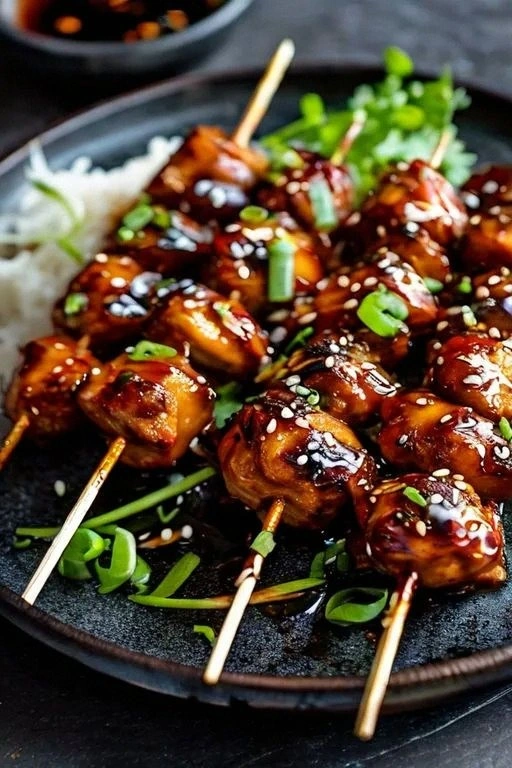
I still remember the night I almost turned my kitchen into a culinary war zone. A friend dared me to create the ultimate teriyaki chicken skewers, and I thought, “Sure thing.” I grabbed the ingredients, set the timer, and the first thing that happened was a dramatic explosion of soy sauce fumes that could have double as a smoke alarm. The pan was already sizzling, and the aroma of garlic and ginger hit me like a warm hug, promising something delicious. The whole kitchen smelled like a Japanese street market, and I was already picturing the glossy glaze coating each bite like a velvet ribbon.
I watched the chicken cubes dance in the pan, their edges crisping to a golden brown that shivered like a delicate snowflake. The sizzle was unmistakable, a high‑pitched symphony that whispered, “This is going to be good.” I could almost taste the sweet honey marrying the umami of soy, the subtle heat from the ginger, and the nutty hint of sesame oil. The heat rose, and my senses were flooded with the promise of caramelized, sticky, perfectly balanced flavor. Every time I lifted a skewer, the glaze clung like a second skin, promising a mouthful of sweet, savory, and slightly smoky delight.
What sets this version apart? For starters, I use a homemade teriyaki sauce that’s thinner and sweeter than most store‑bought options, allowing the glaze to coat the chicken without overpowering it. I also introduce a quick marination step that infuses the meat with depth, turning ordinary cuts into succulent morsels. The secret is the balanced ratio of soy, honey, and ginger—too much of one and the flavor collapses into either sweetness or saltiness. I’ve experimented with different oils; sesame oil adds a nutty aroma that elevates the dish, while a splash of vegetable oil keeps the glaze from burning. Finally, the skewering technique ensures even cooking and a beautiful char that adds texture without compromising tenderness.
I dare you to taste this and not go back for seconds. Most recipes get this completely wrong by using too thick a sauce or over‑cooking the chicken, resulting in dry, flavorless pieces. Here, the glaze glistens, the edges crisp, and the center stays juicy, a harmonious dance of textures that will make you wonder how you ever made it any other way. Picture yourself pulling these out of the pan, the whole kitchen smelling incredible, and the guests lining up for the first bite.
If you've ever struggled with achieving that glossy, caramelized finish, you're not alone—and I've got the fix. The next section will walk you through every single step. By the end, you'll wonder how you ever made it any other way.
What Makes This Version Stand Out
- Flavor Profile: The sauce is a perfect balance of sweet, salty, and umami, with a hint of ginger that cuts through the richness. Every bite delivers a complex, layered taste that lingers on the palate.
- Texture: The chicken stays tender inside while the outside achieves a caramelized crust that snaps delightfully when you bite. The glaze is thick enough to cling yet thin enough to set quickly.
- Ease: No fancy equipment required—just a skillet, skewers, and a few pantry staples. The method is straightforward, making it accessible for beginners and seasoned chefs alike.
- Versatility: Serve it over rice, in a sandwich, or as a party appetizer. The recipe scales beautifully for any occasion, from a quick weekday dinner to a weekend gathering.
- Make‑Ahead Friendly: Marinate the chicken ahead of time, assemble the skewers, and reheat in the oven for a stress‑free meal. The glaze stays intact, and the texture remains intact.
- Ingredient Quality: Using high‑quality teriyaki sauce and fresh ginger ensures a depth of flavor that pre‑made sauces can’t match.
Inside the Ingredient List
The Flavor Base
The teriyaki sauce is the cornerstone of this dish. It’s a silky, sweet blend that coats the chicken and caramelizes into a glossy glaze. If you’re using store‑bought teriyaki, look for a lower sugar content to avoid burning. You can also make a quick homemade version by whisking equal parts soy sauce and mirin, then adding honey and a splash of water to thin it out.
The Texture Crew
Soy sauce provides depth and saltiness, while honey adds body and a subtle caramel undertone. Garlic brings sharpness and a fragrant bite, and fresh ginger lends a bright, peppery kick that balances the sweetness. Sesame oil, a small amount, adds a nutty aroma that elevates the dish, while vegetable oil ensures the glaze doesn’t stick or burn. Together, they create a harmonious flavor profile that coats every piece.
The Unexpected Star
The sliced green onions and sesame seeds are optional, but they add a fresh crunch and a pop of color that makes the dish visually stunning. Green onions contribute a mild onion flavor that complements the glaze, while sesame seeds add a toasty nuttiness. If you’re gluten‑free or vegan, you can replace the soy sauce with tamari and use maple syrup instead of honey.
The Final Flourish
The garnish is the finishing touch that elevates the dish from simple to spectacular. Sprinkling fresh green onions and toasted sesame seeds just before serving adds texture, color, and a burst of aroma. It’s the final flourish that turns a great meal into a memorable experience.
Everything's prepped? Good. Let's get into the real action.
The Method — Step by Step
- First, cut the chicken into uniform 1‑inch cubes. Consistency ensures even cooking—no one wants a bite that’s over‑done while another is raw. Pat the cubes dry with a paper towel to help the sauce adhere better.
- In a bowl, whisk together the teriyaki sauce, soy sauce, honey, minced garlic, grated ginger, and sesame oil. The mixture should be smooth with no clumps of ginger or garlic. Taste the sauce; it should be sweet but not cloying, with a subtle umami punch.
- Add the chicken cubes to the bowl, tossing until each piece is fully coated. Cover the bowl with plastic wrap and refrigerate for at least 30 minutes, or overnight for maximum flavor. This marination step is where the magic happens.
- Thread the marinated chicken onto skewers, spacing pieces about an inch apart. If you’re using wooden skewers, soak them in water for 30 minutes beforehand to prevent burning. This spacing allows the sauce to caramelize evenly.
- Heat a large skillet over medium‑high heat and add the vegetable oil. When the oil shimmers, place the skewers in the pan, leaving a little space between each. This prevents steaming and encourages a crisp exterior.
- Sear the skewers for 3–4 minutes on each side, turning occasionally. You should see a beautiful brown crust forming and the glaze thickening into a glossy coat. The aroma should be intoxicating.
- During the last minute of cooking, brush an extra splash of teriyaki glaze onto each skewer. This step adds an extra layer of flavor and a shiny finish. It also helps keep the meat moist.
- Once cooked, remove the skewers from the skillet and let them rest for 2 minutes. This allows juices to redistribute, keeping the chicken juicy. While they rest, sprinkle the optional green onions and sesame seeds.
- Serve immediately over steamed rice, alongside a fresh salad, or as part of a charcuterie board. The skewers are best enjoyed hot, but they’re also great for a quick lunch the next day.
That's it — you did it. But hold on, I've got a few more tricks that'll take this to another level.
Insider Tricks for Flawless Results
The Temperature Rule Nobody Follows
Cooking at the right temperature is key. A medium‑high flame caramelizes the glaze without burning it. If the skillet gets too hot, the sauce will scorch before the chicken cooks through. Keep the heat steady, and use a thermometer if you’re a purist.
Why Your Nose Knows Best
Smell the sauce before adding it to the pan. If it smells slightly sweet and umami, it’s ready. A burnt smell means you need to lower the heat. Your nose is the best judge of flavor and doneness.
The 5‑Minute Rest That Changes Everything
Letting the skewers rest after cooking allows the juices to redistribute, preventing dry bites. I’ve seen people skip this step and end up with a slightly dry center. A short rest makes a huge difference.
Using Wooden vs. Metal Skewers
Wooden skewers add a subtle smoky flavor, but they can burn if the heat is too high. Metal skewers are heat‑resistant and easier to handle. If you use wood, soak them first to avoid flare‑ups.
Finishing Touches
A quick drizzle of sesame oil right before serving adds a final pop of aroma. It also gives the glaze a glossy sheen. I always keep a small bottle of toasted sesame oil handy.
Creative Twists and Variations
This recipe is a playground. Here are some of my favorite ways to switch things up:
Asian Fusion Skewers
Swap teriyaki for a sweet chili sauce and add sliced bell peppers. The bright colors and sweet heat create a vibrant, finger‑food favorite that pairs well with rice noodles.
Herb‑Infused Delight
Add chopped fresh basil or mint to the marinating sauce for a fresh, aromatic twist. The herbs cut through the richness and add a refreshing layer of flavor.
Grilled Pineapple Skewers
Thread pineapple chunks with the chicken for a tropical flare. The caramelized pineapple caramelizes alongside the glaze, adding a sweet, tangy contrast.
Vegan Version
Replace the chicken with tofu or tempeh. Marinate the protein for longer to absorb the sauce. The result is a plant‑based skewer that still delivers the same glossy, flavorful bite.
Cheese‑Covered Skewers
After cooking, sprinkle shredded mozzarella or cheddar over the skewers and let it melt slightly. The cheese adds a creamy layer that pairs wonderfully with the sweet glaze.
Spicy Sesame Skewers
Add a tablespoon of sriracha to the sauce for a kick. The heat balances the sweetness, making it a crowd‑pleaser for spice lovers.
Storing and Bringing It Back to Life
Fridge Storage
Store leftovers in an airtight container for up to 3 days in the refrigerator. Keep the glaze separate if you’re worried about the chicken becoming soggy. Reheat gently in a skillet or microwave until warm.
Freezer Friendly
Freezing is a great option for meal prep. Portion the skewers into freezer bags, seal, and freeze for up to 2 months. Thaw overnight in the fridge before reheating.
Best Reheating Method
Reheat in a skillet over medium heat for 2–3 minutes, brushing with a splash of water to keep the glaze from drying out. The tiny splash of water steams the chicken back to perfection, preserving its juiciness.